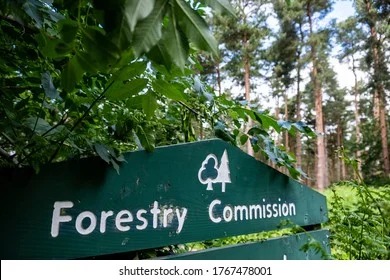
Ghana currently has 447 active Social Responsibility Agreements (SRAs) worth GHS 4.52 million, benefiting forest fringe communities across the country, according to an official of the Forestry Commission.
Bright Owusu Sekyere, Manager of Systems and Data Reconciliation at the Timber Validation Department, disclosed this during the launch of the Agence Française de Développement (AFD)-Forestry Commission SRA Project. The initiative aims to strengthen the implementation of Social Responsibility Agreements in Ghana.
SRAs are designed to ensure that communities affected by timber harvesting receive direct benefits from logging activities. The funds support local development projects and improve livelihoods in areas where timber operations take place.
The agreements are financed through five per cent of stumpage fees and remain the only direct financial benefit that timber-affected communities collectively receive from logging activities.
Speaking in an interview, Mr. Sekyere explained that the Forestry Commission is responsible for ensuring that timber companies sign SRAs before receiving licences to operate. He added that companies that fail to comply with the requirement risk losing their licences.
“As a government agency, we are supposed to ensure that the SRA is signed. So we witness the signing of the SRA and ensure that there is compliance. So after signing, we must ensure that the companies are paying what is due to the communities,” he said.
He noted that the legal framework for enforcing SRAs was strengthened in December 2017 through Legislative Instrument (LI) 2254, which provides clear guidelines for implementation and compliance.
The process involves several stakeholders, including the Forestry Commission, timber firms, traditional authorities, SRA Committees, and beneficiary communities.
SRAs also play an important role in Ghana’s Timber Legality Assurance System under the FLEGT Voluntary Partnership Agreement framework. Compliance with these agreements is one of the requirements for obtaining a FLEGT licence.
The AFD-FC SRA Project is valued at approximately 300,000 euros and receives funding through the European Union’s FLEGT VPA programme.
Key partners supporting the project include Civic Response, Rights and Advocacy Initiatives Network, DEVNEST Systems, and the Forestry Commission.
Providing details of the one-year project, Albert Katako said the initiative will train Forestry Commission officials and timber contractors on the legal and operational requirements of SRA implementation. It will also encourage stronger collaboration among stakeholders to monitor compliance, address grievances, and resolve disputes.
Mr. Katako added that the project will help SRA Committees better understand their responsibilities, improve community engagement, and strengthen transparency and accountability in the management of SRA funds.
“We intend to identify gaps and provide recommendations to strengthen the institutional framework and stakeholder coordination for effective SRA enforcement,” he said.