Seven days. That is how long Ghana’s public schools have been without normal teaching and learning as thousands of teachers withdraw their services over grievances that the government has known about for months.
And after seven days, the country is still waiting for something more substantial than another meeting, another assurance and another promise.
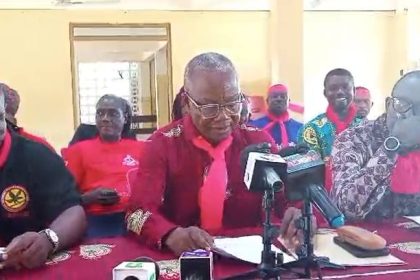
The nationwide strike by the Ghana National Association of Teachers (GNAT), the National Association of Graduate Teachers (NAGRAT) and the Pre-Tertiary Education Teachers Association of Ghana (PRETAG) has entered its seventh day, with negotiations between the unions, the Fair Wages and Salaries Commission and the Ghana Education Service ending on Tuesday without an agreement.
That should embarrass the authorities.
Not because teachers are above accountability, and certainly not because strikes should become the first response to every disagreement. But because a government that has had repeated engagements with organised labour should not need seven days of disruption before treating a festering problem with the urgency it deserves.
The unions have raised particular concern about teachers who passed promotion examinations but have not been placed on their new grades. Government says it is validating data covering about 51,000 teachers and has committed to placing all promoted teachers on their new grades by October 30.
That figure should prompt serious soul-searching: why was a problem involving tens of thousands of teachers allowed to fester until it brought public education to a standstill?
And the consequences are no longer confined to negotiation rooms in Accra. Media reports suggest that some parents in the Savannah Region and surrounding areas have moved their children to private schools or arranged extra lessons at home to prevent them from suffering academic setbacks.
That development should worry every education policymaker. It exposes a sad reality; when public education weakens, families with money can create alternatives, while poorer households are left waiting for the system to recover. What begins as a dispute over conditions of service can therefore deepen existing inequalities in access to quality education.
The answer cannot always be that government is engaging stakeholders.
Engagement is not an achievement when people remain unpaid. A meeting is not a solution when the same grievances return to the table. And a promise is not progress until it produces something tangible in the lives of the people to whom the promise was made.
This is where government must stop treating the strike as a public-relations problem and start treating it as a governance failure.
Every additional day of this impasse widens the damage. Parents are scrambling for alternatives, teachers are losing confidence in commitments made to them, and pupils are losing valuable classroom time. The longer the strike continues, the more difficult it becomes to pretend that this is simply another labour dispute that will disappear after another round of talks.
The Education Minister, Haruna Iddrisu, has appealed to the unions to return to the classroom and assured them that government will honour its commitments. But teachers are not asking merely to hear commitments repeated. They want those commitments implemented.
And that distinction matters.
Ghana cannot continue with a cycle in which workers complain, government promises, negotiations stall, workers strike, politicians appeal for calm, another deadline is announced, and everyone waits for the next confrontation.
That is not industrial relations. That is crisis management masquerading as governance.
Teachers deserve to be paid what they are owed. Government has a duty to protect children from prolonged disruption to their education. These positions are not contradictory. They demand the same thing: a government capable of resolving legitimate grievances before they become national emergencies.
Seven days of lost learning should be enough to remind everyone what is at stake.
Government must resolve the outstanding issues with urgency, the unions must remain accountable for the consequences of prolonged industrial action, and both sides must remember that the ultimate casualties of this impasse are not sitting at the negotiating table.
They are the children whose education cannot be put on strike today and recovered tomorrow.