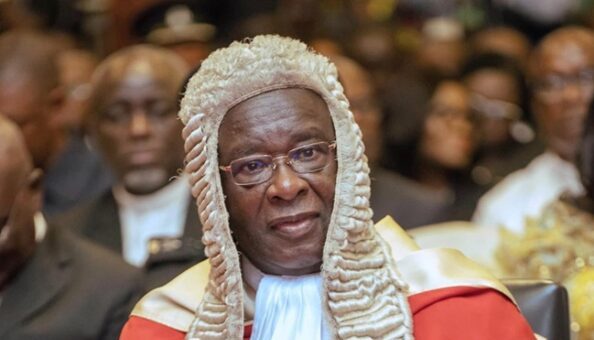
The Ghana Center for Democratic Development (CDD-Ghana) has urged Chief Justice Paul Baffoe-Bonnie to exercise restraint and discretion in his public engagements to protect the impartiality and credibility of Ghana’s Judiciary.
The call follows comments made by the Chief Justice on Wednesday, September 2, 2026, during visits to the Social Security and National Insurance Trust (SSNIT) and the Minerals Income Investment Fund (MIIF), together with members of the Council for Legal Education and Training.
During the visit to MIIF, the Chief Justice praised the institution’s current management but questioned its performance over the “past eight years.”
At SSNIT, he similarly compared the institution’s current operations with previous efforts to sell some of its properties, saying the management of the country’s affairs had previously sunk to a low level.
In a statement issued on Friday, September 4, CDD-Ghana said the remarks amounted to a direct comparison between the current and previous administrations, creating the impression that the Chief Justice was endorsing one political side.
“Such commentary creates a perception of political bias, compromises the Judiciary’s non-partisan mandate, and risks breaching the Code of Conduct for Judges and Magistrates,” the Center said.
CDD-Ghana warned that the comments came at a time when public confidence in the Judiciary was already under pressure.
The organisation cited the 2024 Afrobarometer Round 10 survey, which found that only 35% of Ghanaians trust the courts, a 21-percentage-point decline from 2012.
The survey also found that 62% of citizens believe judicial decisions are routinely influenced by powerful interests, while about half of respondents were doubtful that an ordinary person could receive a fair trial.
CDD-Ghana stressed that judges are not expected to completely withdraw from public life but must exercise self-restraint to maintain public confidence in the Judiciary.
“Justice must not only be done but be seen to be done,” the Center said, stressing that the principle requires the Judiciary to maintain a clear appearance of neutrality.
The organisation has therefore urged the Chief Justice to strictly follow the Code of Conduct for Judges and Magistrates and limit public engagements, including visits to other state institutions, to issues directly related to court administration or legal development.
It also called on the Judicial Council and the Association of Judges and Magistrates to strengthen internal oversight and ensure that judicial officers are held accountable regardless of their position.
CDD-Ghana said the Judiciary remains a key pillar of Ghana’s constitutional democracy and warned that any damage to its integrity could threaten democratic stability.
The Center further urged the Chief Justice to reflect on the responsibilities of his office, ensure that his public conduct meets the ethical standards expected of the position and take steps to rebuild the public confidence it considers essential to the administration of justice.