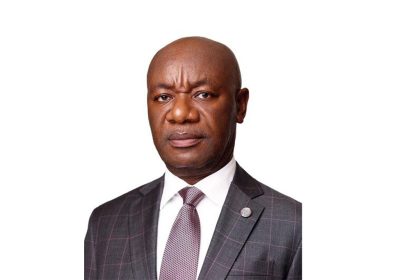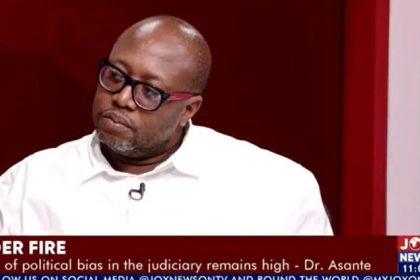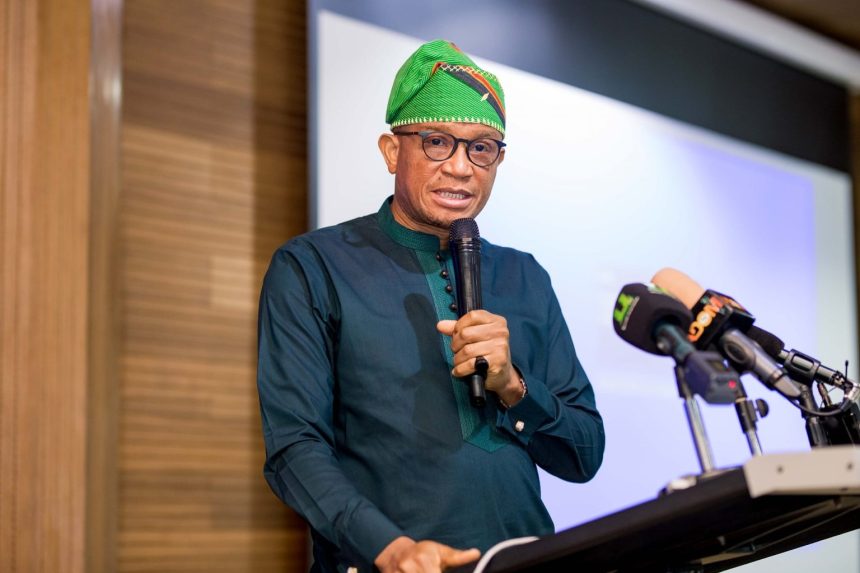
Dr. Mustapha Abdul-Hamid, a religious scholar and First National Vice Chairman aspirant of the New Patriotic Party (NPP), has rejected claims that Dr. Mahamudu Bawumia’s political ambitions are part of a plan to turn Ghana into an Islamic state.
According to him, the voting patterns of Muslims during the 2024 presidential election showed clearly that religion does not determine how Ghanaians vote.
Dr. Abdul-Hamid made the comments while delivering the 2026 Liberty Lecture organised by the Danquah Institute in Accra.
The lecture was held on the theme “One Nation, Many Faiths: Emerging Threats to Religious Tolerance in Ghana”.
He argued that if there was really a plan by Muslims to Islamise Ghana, Dr Bawumia’s position as the NPP’s presidential candidate in the 2024 election would have given Muslims a reason to unite behind him because of their shared religion.
“If such an agenda existed, Mr Chairman, the candidacy of Mahamudu Bawumia would have been the catalyst and his candidature would have been the opportunity for Muslims to rally around such an agenda, but they didn’t,” he said.
Dr. Abdul-Hamid pointed to several constituencies with large Muslim populations, including Ayawaso East, Ayawaso North, Asawasi, Ejura, Tamale North, Tamale Central, Tamale South and Sagnarigu.
He said many voters in these areas supported President John Dramani Mahama, who is a Christian, instead of Dr. Bawumia, who is a Muslim.
For him, this shows that religious identity does not automatically determine a person’s political choice.
“Consciously, in the Ghanaian psyche, our religious differences do not spill over into our political consideration,” he said.
Dr. Abdul-Hamid also warned against presenting a possible Bawumia presidency as a religious project. He said Dr Bawumia’s political career and public policies have focused mainly on the economy and national development.
“Mahamudu Bawumia is seeking the presidency of Ghana not to reorder the religious destiny of our country,” he said.
He also dismissed claims that the proposed introduction of Arabic as an optional subject in basic schools was part of an attempt to Islamise Ghana.
“Arabic is a language separate and distinct from Islam,” he said.
He explained that learning Arabic could give young people opportunities in areas such as international business, diplomacy, education and investment.
Dr Abdul-Hamid also defended the idea of interest-free banking, saying Islamic banking would simply give Ghanaians more choices when it comes to financial services.
“The European experience demonstrates that Islamic banking is not about Islamizing a country. It is about widening financial options,” he said.
He urged Ghanaians not to allow politicians to use religion to divide the country, especially as the 2028 general election approaches.
According to him, most voters are more concerned about issues such as jobs, good governance, security, education, healthcare and better public services.
He therefore encouraged Ghanaians to judge political leaders based on their competence, character and ability to govern rather than their religious background.