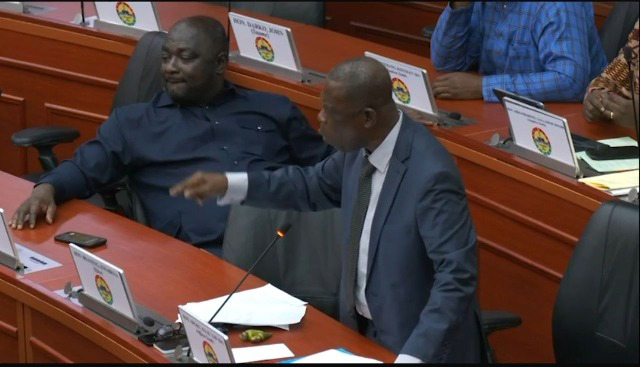
The Ranking Member on Parliament’s Food, Agriculture and Cocoa Affairs Committee, Dr Isaac Yaw Opoku, has called on the government and the Ministry for Food and Agriculture to conduct a comprehensive review of the first phase of the Nkoko Nkitinkiti poultry initiative before proceeding with its second phase.
According to the legislator, assessing the programme’s initial implementation is crucial to identifying challenges, addressing weaknesses and ensuring that the intervention achieves its intended objectives of revitalising Ghana’s poultry sector and improving food security.
Dr Opoku stressed that while the initiative has the potential to reduce Ghana’s heavy dependence on imported poultry products, its long-term success will depend on transparency, efficiency and lessons learned from the first phase.
He noted that any shortcomings in beneficiary selection, distribution, monitoring or technical support should be corrected before the programme is expanded.
The Nkoko Nkitinkiti initiative is one of the government’s flagship agricultural interventions under the broader Feed Ghana Programme.
It aims to boost household and commercial poultry production by distributing millions of birds to between 55,000 and 60,000 households across the country, creating jobs, increasing local poultry production and reducing the country’s reliance on imported chicken.
Since its rollout, the programme has received mixed reactions.
While many beneficiaries have welcomed the support, concerns have also been raised by some stakeholders over the transparency of beneficiary selection, public awareness, distribution methods and implementation guidelines.
Poultry experts and local leaders have urged government to strengthen monitoring systems and improve stakeholder engagement to maximise the programme’s impact.
Agriculture experts have argued that beyond distributing birds, the programme should provide beneficiaries with continuous veterinary support, quality feed, training and access to markets to ensure sustainable production and profitability.
They believe these complementary measures are essential if the initiative is to transform Ghana’s poultry industry and significantly reduce the country’s poultry import bill.
Dr. Yaw Opoku’s call comes as the government prepares to scale up the initiative nationwide with its phase two.
His recommendation adds to growing calls for a careful assessment of the programme’s first phase after the Minister for Food and Agriculture Eric Opoku revealed that some beneficiaries of the program are slaughtering and consuming the distributed birds rather than raising them to build sustainable poultry farms.