The Institute of Statistical, Social and Economic Research (ISSER) has urged the government to invest far more in sanitation and waste management, warning that poor sanitation is costing Ghana billions of cedis every year through rising healthcare costs, reduced productivity, and slower national development.
The recommendation is contained in a new policy brief titled “Waste or Wealth? The Economic Returns to Sanitation Investment in Ghana”, in which the University of Ghana research institute argues that sanitation should be treated as a long-term national investment rather than a routine government expense.
According to ISSER, Ghana currently spends far less on waste management than many lower-middle-income countries and should increase its investment to match international standards.
The report calls for higher budget allocations to sanitation, drainage systems, and environmental health programmes, stressing that the financial losses caused by poor sanitation are much greater than the amount currently invested in the sector.
ISSER also wants government to prioritise funding for densely populated urban communities, flood-prone areas, and underserved peri-urban settlements, where sanitation challenges pose the greatest health and environmental risks.
The institute believes targeted investment in these communities would reduce disease outbreaks, lower death rates, and ease the burden on vulnerable populations. It also says Metropolitan, Municipal and District Assemblies (MMDAs) would be better equipped to tackle sanitation problems with increased financial support.
The report further recommends that government incorporate the health and economic benefits of sanitation into national budgeting and development planning. According to ISSER, policymakers often overlook the long-term savings that improved sanitation can generate.
It argues that viewing sanitation as an investment instead of a recurring cost would highlight its contribution to economic growth, environmental protection, and improved public health.
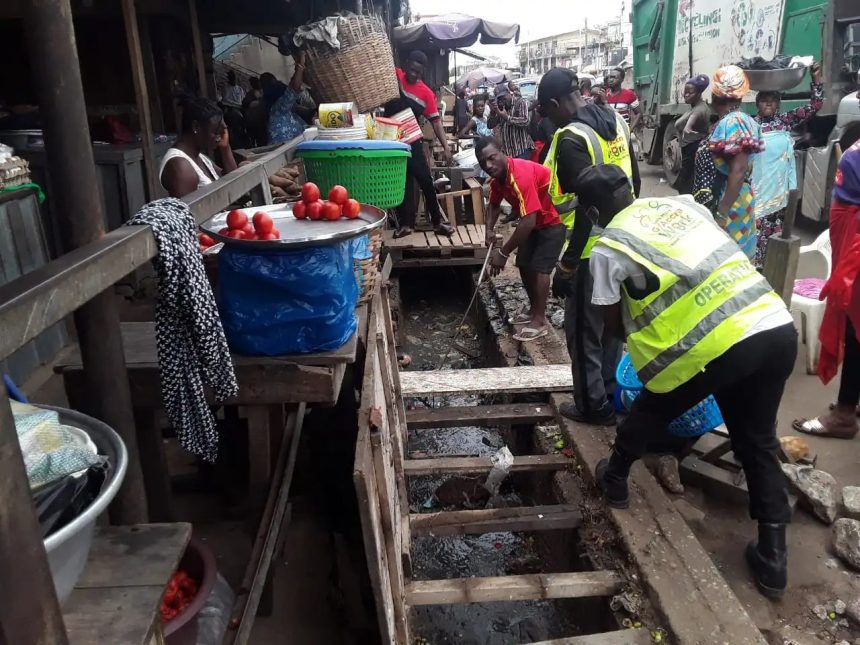
ISSER also called for greater investment in essential sanitation infrastructure, including household and public toilets, faecal sludge treatment plants, efficient stormwater drainage systems, and reliable solid waste collection services.
The institute said these facilities would help reduce the spread of diseases by eliminating breeding grounds for disease-carrying organisms and lowering cases of preventable illnesses such as malaria, cholera, and typhoid.
To improve sanitation services, ISSER urged government to strengthen the capacity of Metropolitan, Municipal and District Assemblies by improving planning, budgeting, regulation, and monitoring of waste management activities.
It also encouraged the use of environmental and public health data to guide local planning, improve the allocation of resources, and measure the economic benefits of sanitation investments.
The report further called for tighter regulation of informal waste collectors. It recommended that municipal assemblies encourage operators, including tricycle (“aboboyaa”) waste collectors, to enrol in active health insurance schemes and undergo regular medical check-ups.
ISSER concluded that increasing investment in sanitation presents a major opportunity to improve public health, strengthen the country’s workforce, support the circular economy, and accelerate Ghana’s progress towards achieving its sustainable development goals.
“Strategic and scaled-up investment in waste and sanitation represents a high-yield opportunity to boost public health and enhance economic productivity,” the report stated.