Renowned economist Professor Peter Quartey has warned that the recurring flooding in Ghana is exacting a devastating toll on the country’s economy, calling for urgent and sustained investment in flood prevention infrastructure rather than continued spending on disaster relief.
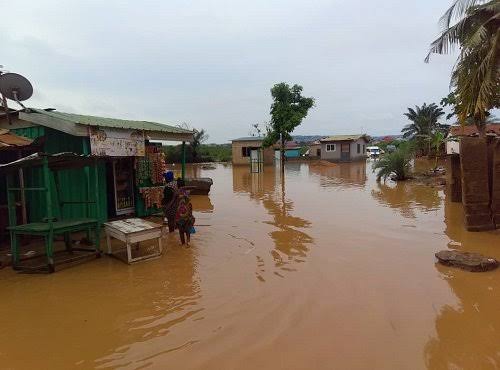
Speaking on the economic impact of the recent floods that ravaged parts of Accra and other communities, Prof. Quartey said the country continues to suffer enormous financial losses each year because successive governments have failed to adequately address the root causes of flooding.
According to him, the destruction caused by annual floods goes far beyond the immediate loss of lives and property, extending to damaged businesses, disrupted economic activity, increased public expenditure and declining investor confidence.
“Floods are killing the economy. Every year we spend huge sums responding to disasters instead of investing in preventive measures that would save lives and protect businesses,” he said.
The Director of the Institute of Statistical, Social and Economic Research (ISSER) noted that repeated flooding disrupts commercial activities, destroys infrastructure and forces both businesses and households to incur significant recovery costs.
He explained that whenever floods strike, shops are destroyed, roads become impassable, production comes to a halt, and workers are unable to report to work, leading to substantial losses in productivity.
“When businesses lose stock, factories cannot operate, and transportation is disrupted, the effects are felt throughout the entire economy,” he said.
Prof. Quartey argued that the country’s response to flooding has become reactive rather than preventive, with governments often mobilising emergency relief after disasters instead of making long-term investments in drainage systems, urban planning and climate resilience.
He called on authorities to prioritise comprehensive drainage projects, enforce building regulations and prevent construction on waterways to minimise future flood disasters.
The economist also urged stricter enforcement of sanitation laws, noting that indiscriminate disposal of waste into drains continues to worsen flooding in many urban centres.
Beyond infrastructure, he said Ghana must improve planning and maintenance of drainage systems while integrating climate adaptation measures into national development policies.
Prof. Quartey believes that unless governments shift from emergency response to long-term flood prevention, the country will continue to pay a heavy economic price every rainy season.
“The cost of preventing floods is far less than the cost of rebuilding after every disaster. We need to start treating flood prevention as an economic investment, not just an environmental issue.”