Every rainy season, Ghanaians watch familiar scenes unfold on television screens and social media timelines: submerged homes, stranded commuters, collapsed roads, and residents wading through chest-high floodwaters in search of safety.
The conversation that follows is equally predictable. Experts point to poor drainage systems. Government officials promise interventions. Citizens blame the indiscriminate dumping of refuse. Yet when the floodwaters finally recede, attention fades until the next disaster strikes.
But after witnessing the devastating floods in Tema Community Five earlier this month, June 6, 2026, I realized there is a critical aspect of Ghana’s flooding crisis that receives far less attention than it deserves.
The biggest problem is not that authorities are unaware of the causes of flooding. The real problem is the failure to enforce existing regulations and the neglect of the hidden dangers that victims face long after the rains stop.
A Journey from Demolition to Disaster
On Saturday, June 6, 2026, I was assigned to cover a demolition exercise near Savannah Junction at Dawhenya, where residents were being evicted following the enforcement of a court order over a disputed parcel of land.
As affected residents broke down in tears, recounting years of payments made to secure ownership of their properties, one question lingered in my mind: Why do innocent people continue to suffer from land disputes while those responsible often face little accountability?
After completing the assignment, my team received reports of severe flooding in Tema Community Five. We immediately headed to the area.
Nothing prepared me for what I witnessed.
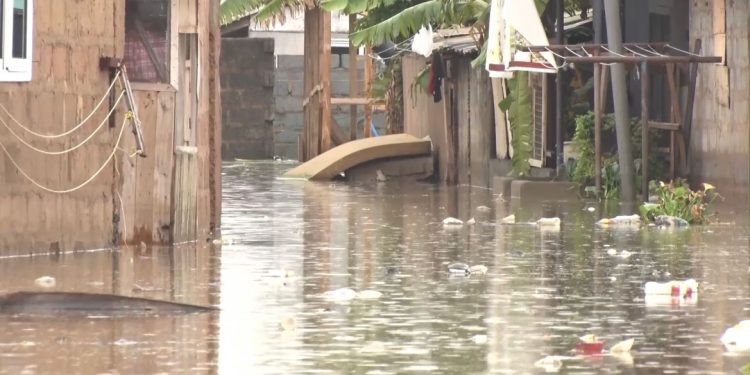
At Church Village in Tema Community Five, part of a bridge had collapsed after floodwaters overwhelmed the drainage channel beneath it.
The scene was chaotic. Families had been displaced, homes submerged, and residents were desperately trying to salvage their belongings.
Then came the stories.
A young child approached me, saying that his school books, clothes, and bags had been swept away by the floodwaters. His family had been forced to seek refuge in a nearby church.
At that moment, the statistics often quoted after floods became real.
Flooding was no longer about damaged buildings and blocked roads. It was about interrupted education, displaced families, lost livelihoods, and emotional trauma.
The Dangers We Rarely Talk About
As I moved through the flooded area speaking with residents, I noticed something troubling.
People were focused on saving their belongings. Understandably so. But in the process, they were exposing themselves to dangers that rarely make headlines.
Electricity poles stood in stagnant floodwaters. Exposed cables hung nearby. Refuse floated across the surface. Hidden beneath the murky water were potential reptiles, sharp objects, and other hazards.
Young children walked through the water without protective gear. Families searched flooded rooms with little regard for the risks around them.
For them, survival came first.
Yet this is where one of Ghana’s biggest flood management gaps exists.
Discussions about flooding often end with property damage assessments. Rarely do we examine the health and safety threats that emerge afterward.
Victims face exposure to infections, waterborne diseases, skin conditions, electrical hazards, snake bites, and psychological distress. Many receive little or no medical screening after returning to their homes.
Ironically, while authorities focus on emergency response during floods, there is far less attention on protecting residents from the secondary disasters that follow.
My Personal Encounter with the Hidden Risks
As part of my reporting, I entered the floodwaters to document the situation and draw attention to the conditions residents were enduring. The footage generated significant discussion online, with many viewers expressing concern about my safety.
Their fears were justified.
Days after the assignment, I developed painful skin rashes on both feet. The irritation served as a reminder that floodwaters are not simply rainwater.
They often contain sewage, chemicals, waste, and harmful bacteria. If a few minutes of exposure could have such an effect, one can only imagine the health risks faced by residents who spend days navigating flooded communities.
This is why flood management cannot be limited to rescue operations and drainage discussions alone.
Public health interventions must become a central part of flood response strategies.
The Enforcement Failure
Over the years, I have reported on flooding in Tema, Ashaiman, and Kpone-Katamanso.
One pattern remains constant.
Residents repeatedly complain about inadequate drainage infrastructure, blocked waterways, and buildings constructed in flood-prone areas.
What is striking is that Ghana already has regulations designed to address many of these issues.
The challenge is enforcement.
Illegal structures continue to emerge on waterways. Wetlands are converted into residential developments. Building permits are often ignored or manipulated. Refuse continues to find its way into drains.
When authorities finally act, interventions often come after lives and properties have already been affected.
Recent demolitions of structures on waterways demonstrate that the government understands the problem. Yet these actions frequently occur after construction has been completed rather than at the planning stage.
Prevention remains weaker than reaction.
Drainage Alone Will Not Save Us
There is no doubt that Ghana requires improved drainage infrastructure.
However, drainage projects alone will not solve the flooding crisis.
As cities continue to expand, old drainage systems become inadequate for growing populations and increasing surface runoff.
But even the best drains will fail if waterways remain obstructed, wetlands continue to disappear, and planning regulations are ignored.
The flooding crisis is therefore not simply an engineering problem.
It is a governance problem.
It is an accountability problem.
And ultimately, it is an enforcement problem.
What Must Change
The conversation about flooding must evolve.
Municipal assemblies should be held accountable for enforcing planning regulations before disasters occur.
Developers who build on waterways must face meaningful sanctions.
Regular drainage maintenance should become a year-round exercise rather than a seasonal response.
Most importantly, post-flood health and safety interventions should receive the same attention as emergency rescue efforts.
Flood victims need medical screening, temporary shelter, psychological support, and public education on health risks associated with contaminated floodwaters.
These interventions are often overlooked despite their importance.
A National Wake-Up Call
Flooding in Ghana is no longer merely a seasonal inconvenience.
It has become a recurring national emergency that threatens lives, livelihoods, education, public health, and economic activity.
The laws exist. The technical knowledge exists. The warnings have been repeated for years.
What remains missing is consistent enforcement and a commitment to addressing the hidden consequences that continue to affect victims long after the cameras leave.
Floods may be natural.
But the disasters that follow are often the result of choices, neglect, and failures that can be prevented.
Until we confront those realities, Ghana will continue to relive the same tragedy every rainy season.