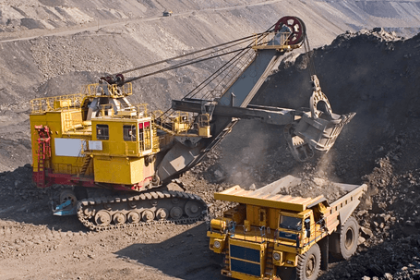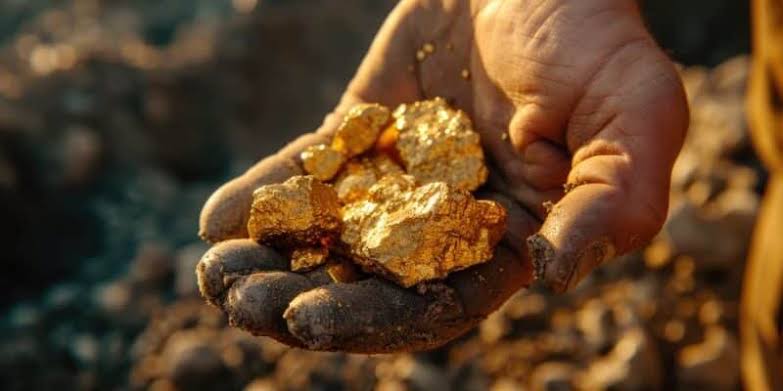
For decades, gold has been the bedrock of Ghana’s economy. The nation is Africa’s largest gold producer and the world’s sixth-largest, accounting for nearly 40% of total exports. But beneath the glitter of bullion lies a deeply troubled sector where corruption, regulatory failure, and a fractured relationship between government and mining companies are bleeding the country of the very wealth it should be generating.
We’re seeing a sector that has been mismanaged at almost every level, and a system where political influence peddling, opaque financial oversight, and the weaponisation of corporate social responsibility (CSR) obligations have created a perfect storm of lost opportunity.
At the heart of the problem is a historical lack of accountability stretching back decades. Successive governments have failed to establish transparent mechanisms for tracking what mining companies actually invest, produce, and pay in taxes and royalties. A simple question for any serious government should be whether the Ministry of Lands and Natural Resources and the Ghana Revenue Authority operate a unified, auditable system for cross-checking declared production figures against actual exports. And if not, then why not? As it stands, companies are able to declare half of what they produce, and there would be no way of knowing.
The multinationals possess far better data on their own operations than the regulators supervising them, and this has enabled systematic underreporting of production and profits. When the government cannot verify figures, it cannot collect what it is owed. Estimates of revenue lost to misreporting, transfer pricing, and other forms of tax avoidance run into hundreds of millions of dollars annually…funds that could build roads, schools, and hospitals in the mining communities that bear the environmental and social costs of extraction.
Serious mining executives remain concerned by a system which can change at any moment, dependent on who is running the country. Any long-term mining investment depends on contractual stability, not the vagaries of political influence. When the rules change in the middle of the game, after mining firms have invested billions of dollars based on a fiscal regime, and then the government introduces new levies, renegotiates stability agreements, or pressures for advance payments on taxes not yet due, then it becomes extremely problematic.
The sector has seen repeated episodes of what can only be seen as “unfair pressure”, demands for payments outside the agreed legal framework, threats of license revocation as negotiating leverage, and the imposition of ad hoc community development levies that bypass the established CSR framework.
Ghana’s mining investment climate has suffered significantly; while neighbouring countries like Côte d’Ivoire and Burkina Faso have attracted increasing exploration spending with stable regulatory regimes, Ghana’s share of regional mining investment has declined even as gold prices have soared on global markets.
Perhaps nowhere is the breakdown more visible than in the arena of corporate social responsibility. What was once a voluntary tool for building community goodwill has been transformed into a coercive system of informal taxation.
Mining companies in Ghana routinely sign Community Development Agreements and contribute to Social Responsibility Funds. Contributions worth tens of millions of dollars. But tracing where this money actually goes is nearly impossible. “CSR has become a slush fund, says a researcher at the Ghana Centre for Democratic Development (CDD-Ghana), and continuing with “Traditional leaders, district assembly officials, and even MPs demand direct payments from mining companies for projects they claim are community priorities. But there is no audit trail.”
The result: contributions intended for community benefit are diverted, misused, or simply vanish. Meanwhile, mining communities in places like Prestea, Obuasi, and Tarkwa continue to suffer from lack of clean water, inadequate healthcare, and degraded environments despite the billions of cedis companies claim to have paid into community development coffers.
Adding to the tension, some political actors and local influencers deliberately amplify community grievances against mining companies, not to secure better outcomes for residents, but to pressure firms into making extra budgetary payments or channelling funds through preferred intermediaries.
The intersection of mining and politics in Ghana is a continuing cycle of conflicts of interest. Political party financiers with interests in the sector secure access to decision-makers. Licenses and permits are approved or denied based on political connections rather than technical or environmental merit.
Several mining sector observers point to the opaque allocation of small-scale mining licenses, nominally reserved for Ghanaians, as a particularly acute problem. Despite the Minerals and Mining Act’s restrictions, politically connected individuals routinely acquire these licenses and either sell them to foreign operators or use them to front for illegal mining operations widely known as galamsey.
“The law says one thing; practice says another,” said a respected lecturer in mining “And the regulators are either complicit or powerless to stop it.”
The institutional framework charged with overseeing the sector is underfunded, understaffed, and vulnerable to political interference. The Minerals Commission, the Environmental Protection Authority, and the Ghana Revenue Authority- the three key regulatory bodies- operate with severe capacity constraints. EPA monitors cannot visit every mining site. Mining inspectors are poorly paid and susceptible to bribery. Revenue auditors lack the sophisticated forensic accounting skills needed to detect transfer pricing schemes.
Making the problem worse, political interference in regulatory decisions has become routine. Key appointments to mining sector oversight bodies are increasingly politicised, and enforcement actions against politically connected operators are rare to non-existent. The result is a regulatory system that is strict on paper but toothless in practice; a gap that both multinational corporations and illegal miners have learned to exploit.
Civil society organisations and industry bodies are increasingly calling for a fundamental review of the government’s role in mining sector supervision, not more regulations, but better enforcement of existing ones. We do not need a new mining law, says the Ghana Anti-Corruption Coalition. “We need the political will to enforce the one we already have. That means depoliticising the regulatory agencies, giving them real independence, and holding them accountable for results.”
There have been key recommendations which clearly need to be adopted, and made the norm of practice; mandatory, independent audit of all mining revenues, a depoliticisation of regulatory appointments through a transparent, merit-based process with no ministerial discretion, a centralized, publicly accessible registry of all CSR payments and agreements, strengthened capacity for the Minerals Commission and EPA, criminal penalties for public officials who solicit or accept improper payments and a parliamentary select committee review of the contractual stability versus sovereign rights balance.
With global gold prices remaining strong and the energy transition driving demand for minerals, Ghana has an opportunity to fix its mining governance before it loses competitiveness altogether.
International mining companies have spoken quietly about their frustrations, and several have delayed expansion plans. Exploration spending is shifting to more predictable countries and jurisdictions. And in boardrooms from Toronto to London to Perth, Ghana’s reputation is described as being a difficult and increasingly costly place to do business. This is nothing to celebrate.
All of this is a consequence that could have been avoided. Ghana possesses world-class gold deposits, a skilled workforce, and a democratic tradition that should make it a premier mining destination. But until the government at the highest levels undertakes an honest and critical review of its own role in the sector’s dysfunction, the wealth beneath Ghana’s soil will continue to enrich a privileged few while the vast majority of Ghanaians see little of the glitter of the gold.
Also, as Ghana looks to the future, the conversation should move beyond how much gold is produced to a more important question: How can the country’s mineral wealth create lasting value for all Ghanaians?
That is the debate policymakers, industry, civil society and citizens must continue to have.