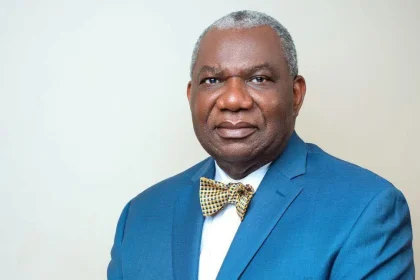

The Member of Parliament for Manhyia South, Nana Agyei Baffour Awuah, has blamed the persistent flooding in Accra on weak enforcement of regulations and poor leadership within local government institutions.
His comments follow the recent heavy rains that caused flooding in several parts of the capital, leaving many residents stranded and forcing others to leave their homes.
The flooding once again raised concerns about the city’s ability to manage stormwater and prevent recurring disasters during the rainy season.
Speaking on the issue after heavy downpour on Saturday, May 30, Nana Agyei Baffour Awuah said the problem goes beyond the weather and points to deeper failures in governance and regulation.
According to him, regulatory institutions are not functioning effectively because too much attention is being placed on generating revenue rather than protecting the welfare of citizens.
“One of the problems, in my view, is failure in regulation. Regulation is failing in Ghana because we put money at the heart of it. Regulation is failing because we don’t prioritise human beings,” he said.
The lawmaker argued that the process of issuing building permits by local assemblies has increasingly become a tool for raising revenue instead of ensuring that people comply with planning regulations and safety standards.
He explained that permits should serve as a means of controlling development and preventing illegal construction, particularly in waterways and flood-prone areas.
However, he believes the focus has shifted away from enforcement.
“The grant of permits is becoming a revenue-generating activity for the assemblies, and it is wrong. When enforcement is tied to revenue generation, it creates problems. The purpose should be to deter wrongdoing, not to make money,” he stated.
He also pointed to leadership challenges at the local government level. He said appointments within local assemblies are often influenced by political considerations rather than competence and expertise.
“We are not always appointing the right people. In many cases, appointments have become a way of rewarding individuals rather than selecting capable people for the job. This is a leadership problem across local governance structures,” he said.