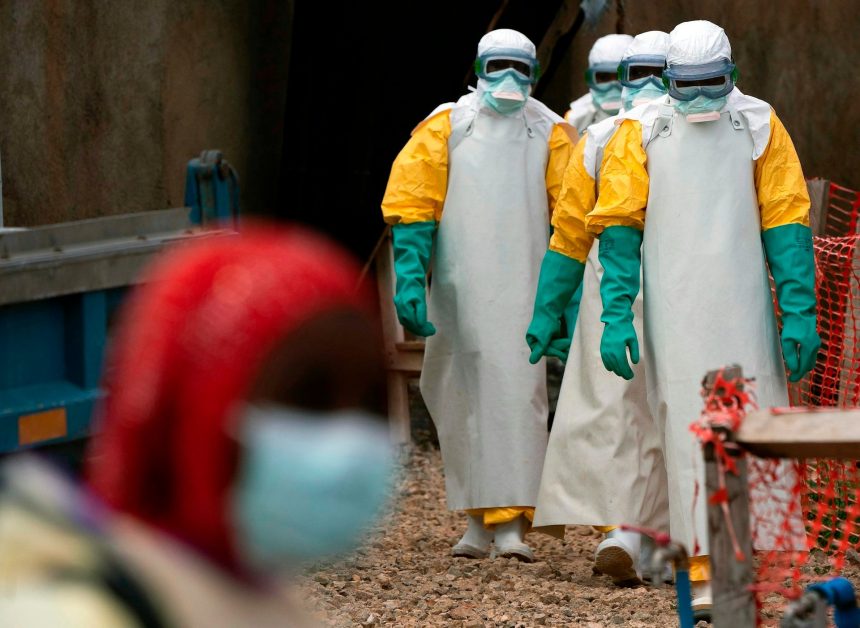
Centres for Disease Control and Prevention has announced a temporary emergency order aimed at protecting the United States from a growing Ebola outbreak in parts of Central and East Africa.
The measure places a temporary restriction on the entry of some non-U.S. travellers coming from affected areas. However, American citizens, lawful permanent residents and essential personnel can still enter the country without restrictions.
Jay Bhattacharya signed the order as health authorities respond to a rise in Ebola infections linked to the Bundibugyo virus strain in the Democratic Republic of the Congo and Uganda.
Health officials explained that the 30-day order is a preventive step rather than a sign of a public health emergency inside the United States.
The temporary restriction targets non-U.S. travellers who have recently stayed in the Democratic Republic of the Congo, Uganda or high-risk areas of South Sudan within the past 21 days.
Authorities believe the move will reduce pressure on airport screening systems, quarantine stations and public health laboratories across the country. It will also allow health agencies to focus their monitoring efforts on returning U.S. citizens and lawful residents.
“By focusing monitoring efforts on a significantly smaller and more traceable group of travelers, authorities can ensure highly rigorous, comprehensive exposure assessments and rapid medical isolation if anyone becomes symptomatic during the virus’s 21-day incubation period.”
The CDC stressed that the policy is limited and carefully designed to avoid unnecessary disruptions. Several groups are exempt from the restrictions, including U.S. citizens, members of the armed forces, overseas government workers and their families.
The order also allows exceptions for travellers approved by the Department of Homeland Security under strict public health measures. Customs officials may also approve entry in cases involving humanitarian concerns, public health interests or law enforcement matters.
Meanwhile, international health organisations such as the World Health Organization and the Africa Centres for Disease Control and Prevention continue to support efforts to control the outbreak in Africa.
During the 30-day period, U.S. health experts plan to carry out detailed risk assessments of the Bundibugyo Ebola strain, strengthen disease surveillance systems and improve diagnostic capabilities.
Officials also intend to develop a long-term strategy to manage future health risks linked to the outbreak.
The CDC has also opened a 30-day public comment period to gather suggestions and opinions from the public as it works to strengthen national health security measures.