An AI facial recognition tool that aims to detect adult migrants posing as children will be deployed at the UK’s borders next year.
A software company has been awarded a contract to develop and test the technology, which will estimate a person’s age by analysing photographs of them taken at the border.
The Home Office says the technology will make it easier to identify adult migrants “attempting to game the system”, after initial testing indicated “promising performance and accuracy”.
But Human Rights Watch urged the government to scrap the scheme, describing it as “unproven technology” that will undermine the protections vulnerable children are entitled to.
Unaccompanied child migrants are processed through the care system rather than the asylum system, which can make it easier to stay in the country.
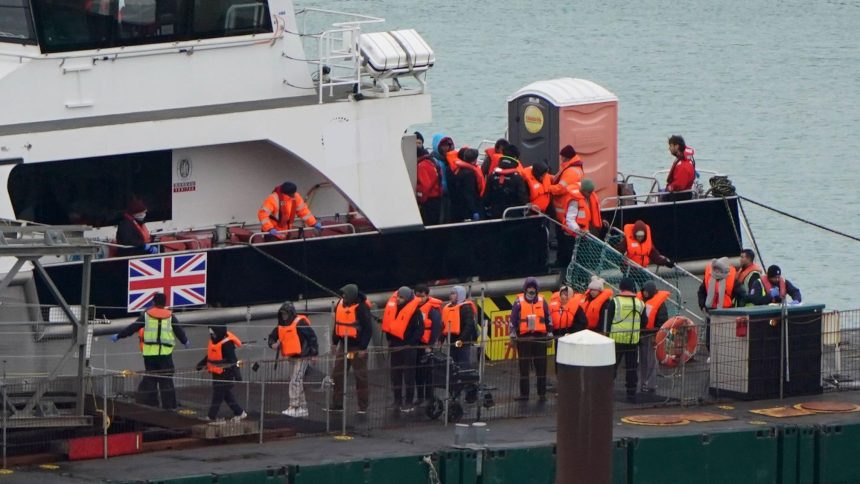
The decision to use the software comes after years of heightened levels of people crossing the English Channel in small boats and claiming asylum at the border.
A total of 111,084 people claimed asylum in the UK in the year ending June 2025, 14% more than in the previous year.
In the year ending March 2026, more than 6,400 migrants claiming to be children were age assessed at the border, with 43% found to be adults, according to Home Office data.
A report carried out by the UK government’s independent immigration inspector last year found cases where adult migrants had been classified as children – and cases where child migrants had been wrongly classified as adults.
The report said in the absence of a “foolproof” test, it was “inevitable that some age assessments will be wrong, which is clearly a cause for concern, especially where a child is denied the rights and protections to which they are entitled”.
The government announced plans to use AI facial recognition technology to combat this problem last year.
Since then, the Home Office has been exploring the use of the technology and this week, a new contract was awarded to Harlow-based IT supplier Akhter Computers Ltd to deliver the scheme.
The contract will see the technology further tested and developed before being rolled out in mid-2027.
The contract will cost £322,000 over three years.
Minister for Border Security and Asylum, Alex Norris, said adult migrants “making false age claims have exploited the system and diverted vital support away from children at risk”.
“That is why we are rolling out AI technology to put a stop to this, ensuring those who game the system are identified, detained and removed without delay, and those who deserve support and protection are given it,” Norris said.
The Home Office has already carried out testing on images of people across different ethnicities and genders, including those that make up the asylum-seeking population, already in its operational system.
But test results have not been used for live decisions yet.
The technology is expected to be trialled for the first time on live cases of asylum seekers at Western Jet Foil, a processing centre in Dover, next year.
Age assessments of asylum seekers are already carried out by trained immigration enforcement officers, who use methods such as examining documents, X‑rays and MRI scans.
The new facial estimation technology will act as an additional tool to support officers at the border when a person’s age is in doubt.
Last year, the UK government said it had concluded that the technology was the most “cost-effective option” to assess the age of asylum seekers.
But human rights groups have criticised the Home Office’s plans to use the technology on children.
Anna Bacciarelli, a senior AI researcher at campaign group Human Rights Watch, said: “The government needs to scrap this deeply flawed approach to assessing child refugees.
“Experimenting with unproven technology to determine whether or not a child should be granted protections they desperately need and are legally entitled to is cruel and unconscionable.
“In addition to subjecting vulnerable children and young people to a dehumanising process that undermines their human rights, we don’t actually know if facial age estimation works.”
She said the technology had been used so far in shops and bars but not refugee processing centres, adding there was “no ethical way to move forward with these plans”.