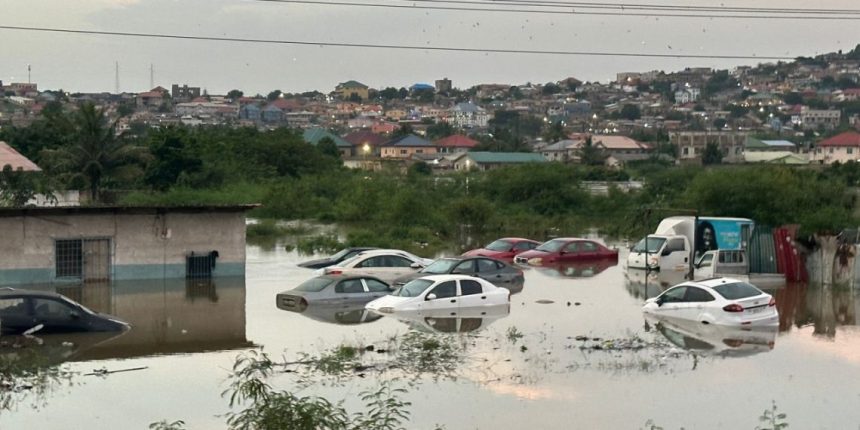
There was a time when rain was welcomed in Ghana.
Children played under the falling drops, farmers anticipated good harvests and families collected rainwater for household use.
Today, however, rain has become a source of fear for many residents in Accra and surrounding communities.
Whenever dark clouds gather, families in flood-prone areas begin preparing for the worst. Important documents are packed into plastic bags, furniture is moved to safer places and residents monitor rising water levels throughout the night.
For many, rain is no longer measured by how long it falls but by the destruction it leaves behind — submerged homes, damaged property, lost livelihoods and, in some cases, loss of life.
The psychological impact of flooding is often overlooked. Victims live with constant anxiety, especially those who have previously lost businesses or homes to floodwaters.
Although heavy rainfall contributes to flooding, experts say human activities have worsened the situation. President John Dramani Mahama has noted that while rainfall patterns have become more intense, blocked watercourses, poor drainage systems, rapid urbanisation and indiscriminate waste disposal are major causes of flooding in Accra.
Urban planners also point to unregulated construction and the replacement of natural drainage areas with concrete surfaces, which prevent water from being absorbed into the ground.
Experts believe reducing flood disasters requires stricter enforcement of building regulations, regular desilting of drains, restoration of watercourses, investment in resilient infrastructure and continuous public education on sanitation.
The government has pledged to clear drainage channels, remove structures blocking watercourses and support victims through the National Disaster Management Organisation (NADMO). Civil society groups have also mobilised relief items for affected communities.
Until lasting solutions are implemented, dark clouds will continue to bring fear rather than hope to thousands of Ghanaian families