On budget day, Parliament fills and the Finance Minister speaks for two hours about fuel levies, school feeding and borrowing costs.
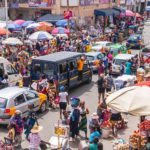
He speaks in English. In Mankessim, a trader who sells smoked fish will feel every line of that budget in her prices.
She will hear what it says only if a radio presenter chooses to translate it.
The Republic has spoken.
It has not spoken to her.
This is the oldest silence in our public life.
The 1992 Constitution exists only in English.
So does every Act, court judgment and State of the Nation Address.
Sixty-nine years after independence, the state has never translated our Constitution into any Ghanaian language.
The only full translation, an Akuapem Twi version launched in 2023, came from one private lawyer, Kwasi Opare, who spent eight years of his own money on it.
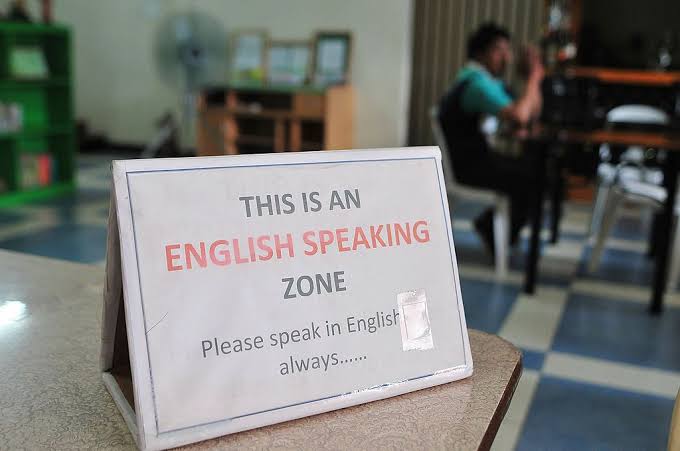
The state addresses its citizens in the language of the colonial office and calls this neutral.
It is not neutral.
It is a wall, and most Ghanaians live on the other side.
The 2021 census counted nearly eight million Ghanaians aged six and older who cannot read or write in any language. Of these, 4.6 million are women.
I argued recently in the Daily Graphic that legal framing has captured our national discourse and locked the non-lawyer out.
Dormant Account Notice
This piece goes one gate further back.
Before the citizen is excluded by legal jargon, she is excluded by language itself. Legalese shuts out the non-lawyer.
English shuts out the non-elite. Millions of Ghanaians never pass the first gate.
A person deliberating in her own language speaks with her full intelligence.
Force her into a second language and she contributes a fraction of what she knows.
Our traditions knew better. In the Akan polity, counsel belonged to those versed in custom, but it was given in a language the whole community understood.
The filter falls hardest on those with the least schooling, on rural citizens and, as the census shows, on women most of all.
Some will point to our airwaves.
FM radio stations discuss the news in our languages every morning.
But that is translation as private enterprise, not the Republic speaking.
The presenter chooses what to carry, and his paraphrase binds no one.
The only version that binds the trader is the English one she cannot read.
That these stations command such audiences is not an answer to the problem. It is the measure of it.
The other objection is that English unites us.
But no one proposes abolishing English.
The proposal is to end its monopoly.
Kenya’s Parliament conducts business in Kiswahili and English.
South Africa recognises many official languages and survives.
Change
What would change look like? Four modest steps.
First, translate the core provisions of the Constitution into the major Ghanaian languages, officially and permanently.
Which languages qualify is a political question to be debated openly.
Second, release the budget highlights and the State of the Nation Address in translation on the day they are delivered.
Third, Parliament should keep the promise it has made to itself.
Order 63 of its Standing Orders, adopted in 2024, permits members to speak in Ghanaian languages with interpretation.
Two years on, the interpreters have not been hired.
A member who thinks best in Dagbani should not have to think worse in English.
Fourth, let district assemblies, which already deliberate in local languages, keep and publish their records that way.
None of this is partisan.
Every government since 1957 has governed in English and left the wall standing. But this government has an opening none had.
The Constitution Review Committee has reported, and amendment bills are expected before the year ends, with a referendum to follow.
If the Constitution is to be rewritten, let the rewritten text be the first the Republic publishes in the languages of its people.
The trader in Mankessim does not need the Republic to speak beautifully.
She needs it to speak to her, and she needs to answer back.
That is the test of a republic: whether its people can reply.
Most of our people cannot, not in the language of its laws.
Until they can, we should stop calling the conversation national.
The writer is a PhD Candidate in African Studies, with a focus on Public Policy and Development, Howard University, Washington DC, USA.