Ghana has already lived through the future of AI misinformation. We just haven’t admitted what it taught us.
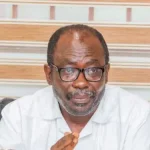
In the closing weeks of the 2024 campaign, a video surfaced of Dr. Matthew Opoku Prempeh, then the New Patriotic Party’s running mate, standing before a crowd of small-scale miners and promising that seized excavators would be returned to them so that they could go back to work, undisturbed.
In a country that has watched the Pra and the Ankobra turn the colour of wet clay, that has argued about galamsey at every funeral and every barbering shop, the clip was incendiary. Within minutes it was everywhere, proving the power of the internet.
Environmental campaigners were apoplectic. Party supporters were jubilant. And then, before a single journalist had finished making calls, the campaign issued its answer.
The video, they said, was a deepfake.
Newsrooms froze. Reporters had watched the footage from several angles. A sign language interpreter stood beside him, translating the same words. GHOne consulted two independent interpreters and got two different readings: which only thickened the fog. Ghanaian journalists, lacking forensic tools of their own, eventually escalated the clip to WITNESS’s Deepfakes Rapid Response Force, a global panel of media forensics specialists.
Four expert teams examined it. Their verdict was unanimous: there was no evidence of AI manipulation. The video was real.
Read that again, because it is the whole story in miniature. The weapon deployed against Ghana that week was not a deepfake. It was the existence of deepfakes. The simple, corrosive possibility that anything can be fabricated, which means nothing has to be answered for. WITNESS found that in 2024, a third of the cases escalated to its rapid response team involved politicians trying to discredit authentic material by claiming a machine had made it.
This is the part of the AI misinformation story that keeps getting told wrong. It was never really about the technology. It is about trust: who has it, who squandered it, and what rushes in to fill the space where it used to be.
The West debates AI lies. We live inside them.
Most of the global conversation about synthetic media is shaped by American and European anxieties: deepfaked candidates, cloned voices in robocalls, AI news anchors. Real problems. But they imagine an information environment with well-funded fact-checkers, media literacy campaigns in schools, and institutions that a sceptical citizen might still consult when something smells wrong.
That is not the environment most of humanity lives in, and it is certainly not ours.
In Ghana, political information does not travel through newsrooms. It travels through WhatsApp groups: family, church, old students’ association, market women, constituency youth wing etc. Across most of Africa’s largest digital economies, more than nine in ten internet users are on the platform, and the voice note has become the continent’s native format: intimate, forwarded, unindexed, unsearchable, unfalsifiable by anyone outside the group.
A fabricated clip in this environment does not need to fool an editor at the Daily Graphic or GBC. It needs to fool one uncle. One pastor. One group admin whose word already carries more weight in that room than any government statement ever has. By the time GhanaFact or Dubawa publishes a debunk, the message has been forwarded through forty groups and reshaped into something the original poster would not recognise.
The fake does not have to win the argument. It only has to arrive first, wearing a face you love.
Trust does not travel the same way everywhere
Here is the deeper issue, and the one closest to my own research in intercultural communication: societies do not place their trust in the same things.
In some contexts, institutional sources carry the most weight: the ministry, the public broadcaster, the paper of record. In others, particularly where institutions have a long record of failing people or lying to them outright, interpersonal trust outranks everything official. A message from a relative or a community elder can outweigh a correction from an international news agency. Not because people are gullible. Because that relative has never lied to them the way the state has.
AI-generated misinformation is dangerous precisely because it has learned to exploit that. It does not merely fake a video. It fakes the register of trust: a familiar cadence, a local accent, a Twi/Gurene inflection, a proverb deployed correctly, a joke only people from that district would understand. A deepfake calibrated for a Ghanaian audience looks nothing like one built for a Slovakian or Indonesian audience, because it is not just imitating a person. It is imitating how a culture decides what is real.
And ours decides largely through people, not paperwork.
Why the imported fixes keep failing
The standard prescriptions, such as watermark AI content, mandate labels, and tightening platform takedown policy, all rest on one assumption: label the fake, and the truth wins.
But labels only work if you trust the labeller. Ghana has already run this experiment, and it failed inside a single election cycle.
During 2024, fake “news cards” like those shareable graphics stamped with media house logos proliferated with forged branding from trusted outlets. Newsrooms fought back by stamping the fakes with a bold “FAKE NEWS” watermark and posting corrections on their official handles. A sensible, low-cost, home-grown defence.
Within weeks, partisan actors had stolen the stamp. Any unflattering news card, true or not, would be rapidly re-issued bearing its own “FAKE NEWS” label. The instrument of verification became an instrument of confusion. The stamp meant nothing, because the thing it depended on (a shared belief in who had the standing to declare something false) had never actually existed.
This is not a Ghanaian peculiarity. Look south. The Electoral Commission of South Africa has just promulgated a Disinformation Code ahead of the 4 November local government elections: parties must label AI-generated material as synthetic content, must publicly correct false claims within 36 hours, and must report suspected disinformation through Real411. It is a serious, thoughtful piece of regulation, and we should watch it closely.
Days before telling parties to label their synthetic content, the commission posted an AI-altered image of its own to promote voter registration. Nobody flagged it. Nobody labelled it.
That is not hypocrisy so much as evidence. Labelling regimes address the supply of fakes. They barely touch the demand: the reasons a doctored clip already feels truer to a voter in Bawku or Bekwai than an official correction ever will.
The gap nobody is funding
Meanwhile, the practical capacity to tell real from fake remains grotesquely unequal.
Dubawa has noted that tools for detecting manipulated audio vary widely in effectiveness, and the robust ones are paid products most African newsrooms simply cannot afford: a problem that compounds when doctored audio is buried inside video. In the Opoku Prempeh case, some Ghanaian journalists could not resolve it domestically at all. They had to send it abroad.
Compare that with the investment platforms pour into content moderation, AI labelling and political ad transparency around elections in wealthier countries. Compare it with AI governance across the continent, where only a handful of states have dedicated strategies and the rest fold the whole question into cybersecurity legislation written before generative models existed.
We are being asked to defend a more sophisticated attack with a fraction of the equipment.
What would actually work
If misinformation is intercultural before it is technological, the response must be too.
Localise media literacy instead of importing it. A campaign designed in Brussels and translated into Ewe/Ga is not the same as one built around how a particular community actually verifies things: through whom, and why. The useful question is not “can you spot a deepfake?” but “who in your life would you ring to check?” Build from that answer.
Back the messengers people already believe. Chiefs, imams, pastors, assembly members, community radio presenters, market queens. These are precisely the figures disinformation impersonates, which makes them the strongest available interruption: if they are equipped and included rather than bypassed. The most effective countermeasure of Ghana’s last election came from exactly this instinct: GHOne began embedding voice notes into its news cards with a prominent “SOUND ON” tag, letting the public hear politicians in their own voices. No watermark, no policy paper, no foreign vendor. Just a fix that understood how Ghanaians actually consume information.
Fund the verification layer we already have. GhanaFact, Dubawa, Fact-Check Ghana, the MFWA coalition, the newsroom desks that stayed up through December 2024 chasing audio clips. They exist. They are under-resourced and over-relied upon. Detection tooling and forensic training for Ghanaian journalists would cost a rounding error compared to what is currently spent debating AI safety in conference halls where no Ghanaian has a seat at the table.
Put the people being hit hardest in the room where the rules are written. Most global conversations about AI and election integrity are led from Washington, Brussels and London, about risks that behave completely differently in Accra, Manila and São Paulo. That is a structural failure rather than a moral one. But it reliably produces solutions shaped to the wrong problem.
What we actually stand to lose
The technology will keep improving. The fakes will keep getting harder to catch with the naked eye, and the cost of making one will keep falling until it is effectively zero.
But the thing that determines whether a fake succeeds was never resolution or realism. It is whether the lie speaks a language of trust the community already knows and whether anything credible is left standing to contradict it.
That is the real casualty, and it is not belief in any particular falsehood. It is the slow death of the possibility of being held to account. A politician who can no longer be caught saying something can always suggest a machine said it for him. A citizen who has been fooled twice stops believing the third thing, even when the third thing is true. What follows is not a country full of people who believe lies. It is a country full of people who believe nothing, and vote accordingly.
Ghana goes to the polls again in December 2028. The tools will be cheaper by then, the fakes better, the voice notes more convincing. The question is whether we will still have spent those years waiting for someone in San Francisco to solve a problem they have never had to live with.
Abugre Alebsuure Abayeta is a doctoral researcher in intercultural communication at the University of Jyväskylä, where his work examines algorithmic bias and intercultural digital inclusion in generative AI. He has a background in journalism and Development Communication.