The Ghana Chamber of Mines has rejected claims by the Institute of Economic Affairs (IEA) that Ghana’s frequent visits to the International Monetary Fund (IMF) are connected to the ownership structure of the mining sector.
According to the Chamber, there is no evidence to support that argument.
The Chamber’s response follows the IEA’s call on the government not to approve the proposed lease extension for Gold Fields’ Tarkwa mine.
The IEA believes Ghana is not receiving enough benefits from its natural resources while foreign mining companies continue to dominate the industry.
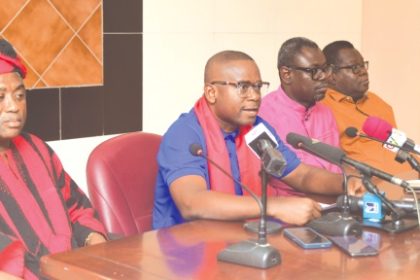
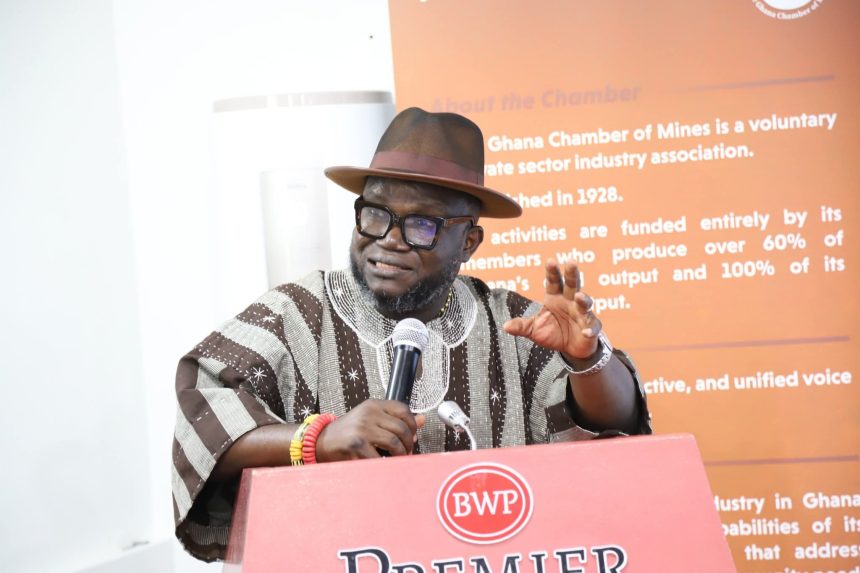
Speaking at a press conference, the Chief Executive Officer of the Chamber, Ken Ashigbey, defended the role of the mining sector in Ghana’s economy.
He said the industry has remained one of the country’s strongest sources of financial support, especially during difficult economic periods.
“There is no credible empirical basis for attributing Ghana’s repeated engagements with the International Monetary Fund to the operations or ownership structure of the mining sector,” he said.
He explained that mining has consistently helped Ghana through export earnings, tax payments, and foreign exchange inflows.
According to him, mineral exports have also strengthened Ghana’s economy during several IMF-supported programmes.
Ing. Ashigbey revealed that the mining sector paid about GH₵19 billion in taxes to the Ghana Revenue Authority in 2025.
He said this amount represented nearly 23 percent of the country’s direct domestic tax revenue.
He further noted that large-scale mining companies contributed a major share of those taxes, even though they produced less than half of Ghana’s total gold output.
The Chamber argued that the real revenue problem exists within the small-scale mining sector.
According to Ing. Ashigbey, small-scale miners produced more than 3 million ounces of gold in 2025, accounting for over half of the country’s gold production.
However, the sector reportedly paid less than GH₵0.5 million in taxes.
He described the situation as one of the biggest sources of revenue loss in Ghana’s economy.
The Chamber therefore called on the government to strengthen regulations and formally organise small-scale mining operations to improve tax collection.
“This structural gap constitutes one of the most significant fiscal inefficiencies in the Ghanaian economy,” he said.
Ing. Ashigbey also urged the IEA to focus more attention on fixing revenue leakages in the small-scale mining sector instead of blaming foreign participation in large-scale mining for Ghana’s economic struggles.