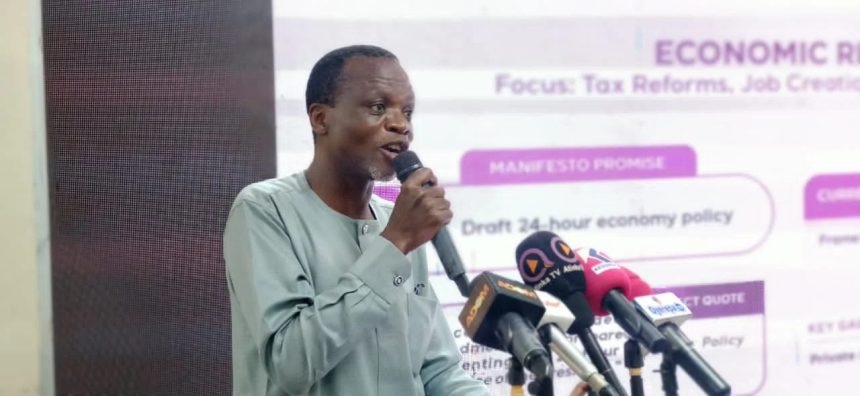
The appreciation of the Ghanaian cedi could provide relief to consumers in the short term, but economist George Domfe has warned that a stronger currency may create difficulties for local producers if it makes imported goods significantly cheaper.
According to Domfe, the impact of the cedi’s appreciation should be assessed beyond its immediate effect on prices.
He said while a stronger cedi can reduce the cost of imported goods and services, it could also weaken the competitiveness of Ghanaian businesses that produce similar goods locally.
“A stronger cedi reduces the domestic-currency cost of imported goods and services,” Domfe explained, noting that this could help lower the prices of petroleum products, machinery, intermediate inputs and other essential goods.
However, he cautioned that cheaper imports could discourage local production, particularly in an economy that already depends heavily on imported goods.
“If goods that could be produced domestically are increasingly imported because imports are relatively cheaper, incentives for local production, investment and industrial expansion may weaken,” he said.
Domfe believes this could worsen Ghana’s dependence on imports and create challenges for the country’s industrialisation efforts.
He argued that the benefits of a stronger cedi would be more meaningful if the appreciation was supported by increased domestic production and improved productivity.
He said Ghana must focus on producing more of the goods it currently imports while strengthening its export capacity.
Such measures, he explained, would reduce demand for foreign exchange while increasing the country’s foreign exchange earnings.
“If Ghana produces more of the goods it currently imports, the import bill will decline. This reduces the demand for foreign exchange,” he stated.
Domfe stressed that the ultimate goal should not simply be to maintain a strong currency but to build an economy capable of producing competitively and creating sustainable employment.
He warned that an exchange rate that makes imports cheaper without corresponding growth in domestic production could offer temporary relief while creating long-term economic vulnerabilities.