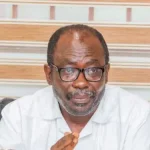
The Director-General of the Narcotics Control Commission (NACOC), Major-General Maxwell Obuba Mantey, has called for stronger and more practical cross-border cooperation among African countries to combat the growing threat of synthetic drugs, cocaine trafficking and transnational organised crime.
He said the evolving nature of the illicit drug trade required African countries to move beyond fragmented national responses and strengthen intelligence sharing, coordinated investigations and joint operations.
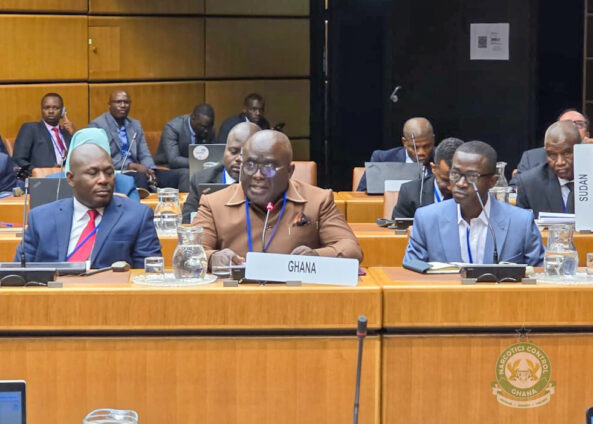
Major-General Mantey made the call in Ghana’s statement delivered at the closing of the 33rd Meeting of Heads of National Drug Law Enforcement Agencies, Africa (HONLEA Africa), held in Vienna, Austria, from September 8 to 11, 2026.
The meeting brought together heads and representatives of African drug law enforcement agencies to enhance regional and subregional cooperation in addressing the world drug problem.
According to Major-General Mantey, no country, regardless of the strength of its law enforcement and border security systems, could effectively combat transnational drug trafficking alone.
He noted that trafficking networks operate across multiple jurisdictions, with synthetic drug precursors, cocaine and illicit financial flows moving through different countries while exploiting gaps in national enforcement systems.
“Cooperation is therefore not a diplomatic courtesy to be affirmed in closing statements; it is the operational prerequisite for any of our national strategies to be successful,” he said.
The NACOC Director-General proposed a “neighbour-to-neighbour” approach as a practical starting point for deepening regional cooperation.
He called for increased intelligence sharing, joint patrols and coordinated border management among neighbouring countries to disrupt trafficking networks.
Major-General Mantey cited Ghana’s bilateral cooperation with neighbouring countries, as well as collaboration between The Gambia and Senegal, as examples of how direct cooperation between neighbouring states could serve as a foundation for broader regional and continental efforts.
He also referenced a high-level dialogue hosted in Accra in November 2025 on “Mapping the Future of Drug Markets in West Africa – Synthetics, Cocaine, Criminal Money, and Strategic Responses.”
He said the discussions from the Accra dialogue remained relevant, particularly in light of the growing impact of synthetic drugs on young people and the potential for organised crime and illicit financial flows to undermine governance and state institutions.
Major-General Mantey urged African countries to make their cooperation more practical, timely and operational, so that intelligence gathered in one jurisdiction could support investigations and enforcement action in another.
He further called for stronger mechanisms for intelligence sharing, coordinated investigations, joint patrols and border management to identify and disrupt trafficking networks operating across national boundaries.
He reaffirmed Ghana’s commitment to strengthening bilateral and regional partnerships and supporting the United Nations Office on Drugs and Crime (UNODC) and other member states in rebuilding and reinforcing cooperation against the illicit drug trade.
Major-General Mantey cautioned that the threats discussed at the meeting would not disappear with the conclusion of the HONLEA Africa meeting. He therefore urged participating countries to translate their commitments into concrete and sustained action.
“We look forward to reporting at the Thirty-fourth Meeting on progress, not promises,” he said.
The meeting was chaired by Ghana’s Ambassador and Permanent Representative to Vienna, Her Excellency Matilda Alomatu Osei-Agyeman.