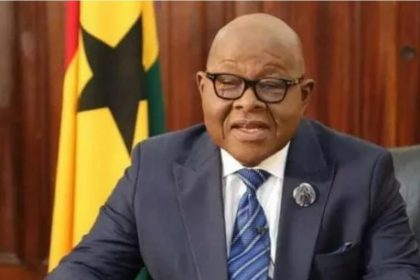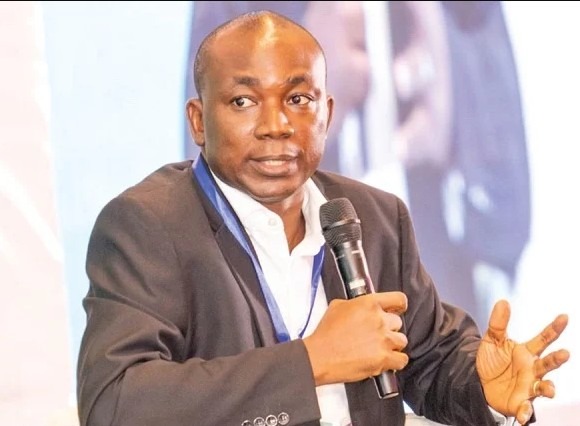
Economist Professor Godfred Bokpin has warned that Ghana risks sacrificing its long-term environmental survival for short-term economic gains through its growing reliance on gold to support macroeconomic stability.
Speaking in an interview on Monday, August 24, Professor Bokpin said the focus on the economic benefits of gold had overshadowed the serious environmental damage caused by irresponsible mining.
He warned that Ghana’s recent economic gains could quickly disappear if global gold prices fall sharply, exposing the country to another major economic shock.
“Today, we have magnified the effect of the Gold Board to the extent that the discussion about irresponsible mining, the dangers, the existential threat seems infinitesimal in the face of so-called macroeconomic stability, which was just a price shock,” he said.
Professor Bokpin questioned how sustainable the current gains were, arguing that a heavy dependence on gold leaves Ghana vulnerable to changes in global commodity prices.
“Look, if gold price today should dip by more than 40%, this macroeconomic stability we talk about will only exist in the textbook. What kind of gain is that?” he asked.
He warned that such a decline could wipe out the gains within six to eight months and urged policymakers to conduct sensitivity analysis and stress tests to assess the economy’s exposure.
Professor Bokpin said Ghana must also look beyond foreign exchange earnings and reserves when assessing the benefits of gold. According to him, the environmental and social costs, including the destruction of water bodies and ecosystems, must be factored into the equation.
“As a country, we should adopt a value chain approach. Let’s account for the environmental subsidy. Ecological integrity we have destroyed,” he said.
Asked whether Ghana was truly better off after considering these costs, he was unequivocal: “We are not better off.”
He described the destruction of the environment in the name of economic stability as selfish and a failure of leadership.
“It’s a selfish position. This is not leadership. We are sacrificing long-term survivability for short-term praise.”
Professor Bokpin further urged Ghana to move away from an economic model heavily dependent on the extraction and export of primary commodities.
“And any growth model that is heavily reliant on environmental destruction, primary commodities, is never sustainable.”
He said Ghana must pursue sustainable prosperity that protects its natural resources, warning that economic gains cannot justify the loss of lives and the destruction of the environment.
“If one person dies today because of irresponsible mining, we have destroyed the water bodies. Is this macroeconomic stability or gain compared to a life?” he asked.