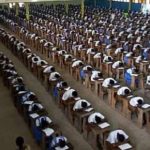

The Minister of Education, Haruna Iddrisu, has directed heads of Senior High Schools (SHS), Senior High Technical Schools, and Technical and Vocational Institutes not to admit students outside the Computerised School Selection and Placement System (CSSPS).
The directive, issued through the Ghana Education Service (GES) and Ghana TVET Service, warned that school heads who admit students outside the approved placement system will face sanctions in line with existing regulations and the Code of Ethics.
The Ministry said the directive is intended to protect the integrity of the placement and enrolment process, particularly under the World Bank-funded Secondary Education Transformation for Access, Relevance and Results for Jobs Project (STARR-J).
It noted that previous placement exercises recorded differences between the number of students officially placed and those actually enrolled, partly due to schools under-declaring vacancies and admitting additional students manually.
“The Ministry has observed that in previous placement cycles, particularly last year, there were significant discrepancies between the number of students placed through the system and the number of students actually enrolled on the ground. This indicates that some school heads admitted students outside the approved placement system,” it said.
For the 2026 placement cycle, the CSSPS has been upgraded to include an enrolment component. Once a school’s vacancies have been declared, validated and confirmed, they cannot be increased.
“Accordingly, once vacancies are declared, validated, and confirmed on the system, there shall be no further expansion of vacancies.
The exact number of students placed through the CSSPS shall constitute the approved enrollment for each school. No school head is permitted to admit any student outside the CSSPS,” the directive stressed.
The 2026 SHS placement exercise was released last Friday, attracting mixed reactions. While some parents were pleased with their children’s placements, others expressed disappointment over students with good grades missing their preferred schools.
Concerns were also raised about students being placed in distant day schools and the challenges faced by those who had to use self-placement.
This year’s process was different because BECE candidates were allowed to view their results before selecting their second-cycle schools, giving them a clearer understanding of their performance before making their choices.
A total of 620,141 candidates, made up of 304,349 boys and 315,792 girls, sat for the BECE from May 4 to May 11, 2026, representing an increase of about 2.7 percent over the previous year.
Haruna Iddrisu is expected to address the public at a press conference today, where he will provide further details on the placement exercise and explain the way forward for students and families facing challenges.