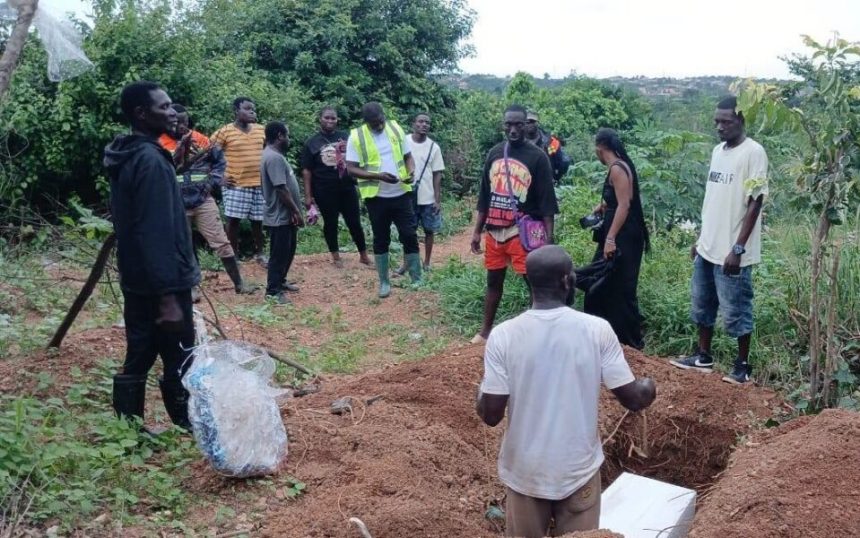
Two people who lost their lives in building collapses caused by heavy rains in the Central Region were buried on Saturday, June 20, as disaster management officials pledged to step up efforts to prevent similar incidents in the future.
The victims, 27-year-old Rukaya Issah and three-year-old Hanson Ato Mensah, died after buildings collapsed in parts of Cape Coast South following a torrential downpour on Friday, June 19.
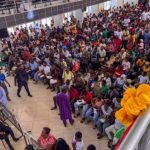
The Central Regional Director of the National Disaster Management Organisation (NADMO), Emmanuel Kwesi Dawood Mensah, joined a delegation of regional officials at the burial ceremonies to sympathise with the grieving families.
“Our thoughts and prayers remain with the affected families during this difficult period,” the director said.
One of the victims, Hanson Ato Mensah, was the son of Dominic Mensah, a disaster volunteer with NADMO’s Safety and Security Department in the Central Region.
The delegation included Regional Public Relations Officer Samuel Essel Duku, Regional Head of Rapid Response Commander Power, Regional Head of Operations Commander Ayensu, and Regional Head of Projects, Disaster Volunteer Groups and Livelihoods, Alhaji Farouk Adamu.
The tragic deaths have renewed concerns about flooding and weak building structures in parts of the region, where heavy rainfall often causes damage during the rainy season.
NADMO said it will work closely with local authorities, engineers and community leaders to strengthen safety inspections and remove buildings that are considered unsafe in order to reduce future risks.
Earlier on Saturday, officials from NADMO and the Hydrological Authority carried out a joint inspection of flood-prone areas in Cape Coast and nearby communities as part of efforts to improve disaster prevention measures.
The inspection team, led by Emmanuel Kwesi Dawood Mensah and the Regional Hydrological Director, Engineer Eben Okine, examined drainage systems, waterways and areas affected by encroachment.
According to officials, the exercise was aimed at identifying blocked drains, silted waterways and flood-prone areas that require engineering solutions such as dredging and the expansion of drainage systems.
Authorities said the collaboration marks a move beyond emergency response, with greater focus on long-term measures to reduce disaster risks and protect lives, property and livelihoods across the Central Region.