“Oh junior, there’s nothing left… you can go and wait for your food,” said my aunt.
“Ah ah mommy, but we’ve not washed the pestle?”
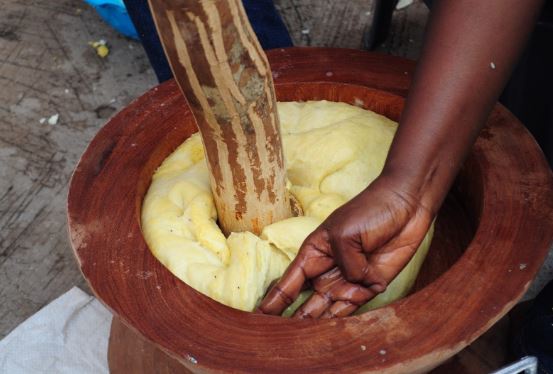
That was what ensued one Sunday afternoon at my uncle’s house between my aunt and me. We had just finished pounding fufu. My cousins were laughing, sweat shining on their arms, proud of what they had done. The sound of the pestle hitting the mortar filled the yard, and now the food was ready.
I stood there waiting for someone to fetch water to clean the pestle. But the boys were already walking away. My aunt quietly came out, poured water into the mortar, and began to wash.
I could not believe it. In my mother’s house, you never pounded and left. You finished everything. You cleaned the mortar, rinsed the pestle, wiped the floor. That was how I was raised. However here, the boys were excused the moment the pounding was done. This day will forever live in my memory. As a growing young man, whenever I eat fufu, I wonder whether this small act, this everyday thing we call tradition, could be where our problem as an African society begins.
When you watch the pounding closely, you see the truth. The young boy raises the pestle high and strikes hard. He is proud of his strength. He does not always notice the texture of the fufu, whether there are lumps forming, whether the rhythm is right. The woman notices. She feels the fufu with her hands, she turns it, she tells him when to slow down or stop. She guides the process with care. Yet when daddy gets home and enjoys this smooth mixture of cassava and plantain, he asks in excitement, “Who pounded this fufu?” The woman, who paid attention and saved the meal, fades into the background.
This, I believe, is what we teach the African boy and girl. We teach boys that effort matters more than attentiveness. We teach girls that their job is to fix what men do without care. From something as ordinary as fufu pounding, we quietly build men who believe their strength is enough and women who believe their patience is duty.
On that same day, I assumed the older brother mantle and chastised my cousins for leaving their mother to wash the dishes. The younger one, feeling ashamed, went for a knife to scrape the pestle, and I almost screamed. If you have ever washed a pestle, you know you cannot use a knife. It seems like the easier option, but it destroys the wood. You must use a sponge. It takes longer, but it keeps the pestle smooth and alive. This simple act of washing, often denied to the African boy, could have taught the African man patience, tenderness, and respect for what his hands have used. In turn, it teaches the African girl endurance and cleaning after the consequences of men.
We think we are preserving culture, but we are really preserving imbalance. Every time a boy pounds and leaves, we tell him that care is not his responsibility. Every time a woman bends over to wash, we tell her that she must always stay behind. That is how misogyny begins, not with anger or cruelty, but with small permissions that go unchallenged.
The sad thing is that the African man grows up thinking he is helping when he pounds fufu. He says it proudly, as if it is a favour. The honest truth is that he is just doing the loud part, the part that is seen. The real work, the quiet work that requires patience and care, is still left for the African girl turned woman. She feels the texture, she saves the meal, she cleans the pestle. And she does it without complaint, because that is what she was taught.
Today, watching my grandma insistently wash the pestle alone, I see something I had never noticed before, the way she moves her hands slowly inside the wood, the way she rinses and wipes until it shines. She is not just cleaning. She is finishing what I left undone. She is ensuring I do not worsen the damage I cause. This has been the duty of the African woman, she finishes what irresponsible men start, she carries what the careless man has dropped, she heals what the careless boy breaks.
We call it tradition, but it is training. We men are trained to walk away when the work turns quiet. Our sisters and mothers are trained to stay until everything is right again. And then we grow up and see the same pattern everywhere in marriages, in offices, in the way we are praised for showing up yet expect women to hold everything together.
Maybe the change can start right there, in the kitchen, beside the pestle. Let the man who pounds also wash. Let him feel the weight of what it means to care for something he used. Let him learn that strength without attention is waste, that real masculinity is not in striking hard but in staying to clean after himself.
If we can learn that, maybe our homes will look different. Maybe our young boys will learn to see a new kind of balance. Because the truth is, fufu pounding is not just about food, it is about who we become after we eat.