Dating in your mid-30s is hard simply because most people have already found their mate by now. In addition to the normal difficulties in finding a good, local match, dealing with disability and chronic illness on top of that makes it almost impossible to find a long-term relationship.
These are some common questions that come to mind during my search and how I’ve handled them:
1. What do you write on your dating profile when you’re disabled or chronically ill?
Do you open up about your illness or disability on your profile, or do you wait to chat with someone before sharing that information?
Personally, I put it right up front and center. I state my limitations loud and clear because I don’t want to pursue anyone who doesn’t know what my life looks like, nor doesn’t know what reality dating me would be like.
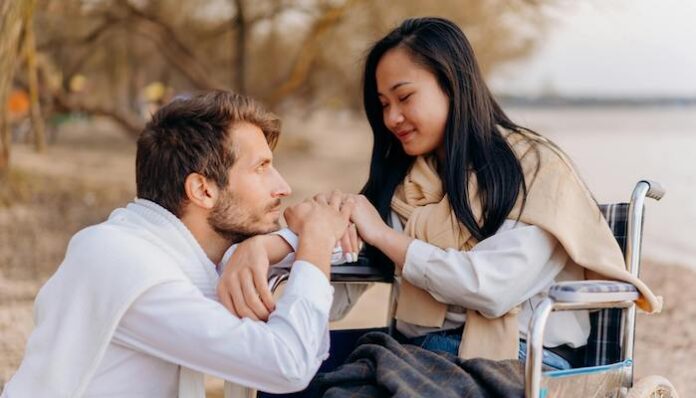
I know the degree of my symptoms, and I’d never cover up the struggle just to meet someone. When I date, I want the other person to choose me, disabilities and all. I would rather be single than be a burden. And I don’t want anyone to be surprised when I wheel into a coffee shop instead of walking in like they might expect.
2. How do you talk about medical equipment?
Do you tell the date you have a service dog, wheelchair, or walker before or after you meet?
For me, I tell them about my service dog within the first two sentences of our conversation – my service dog is my pride and joy. I also want the person to know what they may be signing up for. I don’t blame anyone that doesn’t want to take all my needs into consideration before we do anything. Of course, I’ll take all of their needs into consideration, too, but most people are more mobile and independent than I am at this age.
3. How do you keep your match interested long enough to meet in person?
I find that connecting online and in person are two very different types of relationships. While online can make it easy to feel like you’ve met the ideal partner, that could change drastically if you meet in person. To do this, of course, the person I’m talking to has to stay long enough to meet me in person.
By meeting in person, they can decide if they want to deal with the low days, and accept the very few good days. They can also decide to accept the responsibility, extra time needed, the limitations on travel, and everything that comes with chronic illness.
I want my potential partners to know, right off the bat, that they are meeting a disabled, chronically ill lady who has a progressive disorder that has no cure. But I also want them to know that I’m kind, empathetic, and have a good sense of humor. That way, I hand the ball in their court, letting them decide if my existence in their life is worth all the bad days.
And who knows? Maybe I’ll meet another couch potato someday – one with enough self esteem to not feel small while helping me do daily tasks.
I hope to meet someone who sees me for who I am, not the lines, tubes, and bags hanging from my abdomen.
Until I meet someone who truly sees that my medical issues are no big deal, I’ll stay single. While I crave a deeper, long-term connection, I’ve been single for 10 years now, and I’ve figured out how to live happily on my own. I’m still waiting to meet that person who wants to do life with me in their own creative way, and I’ll keep waiting until I meet them.
People who have disabilities and chronic illnesses can still have deep and meaningful relationships and bonds with soulmate partners. We are not something to pity. We have brains that think just like everyone else, whether we stand, sit, talk, or hear. And, like everyone, we deserve to date and find healthy love.