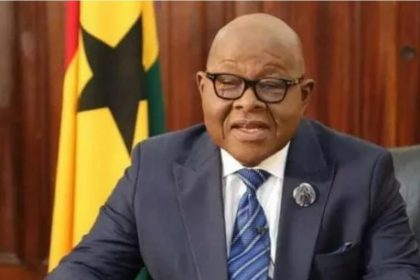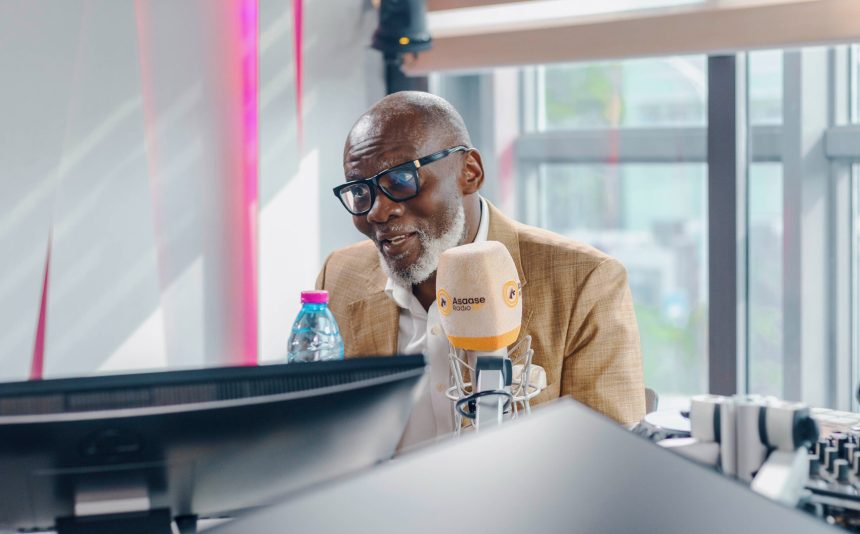
Political commentator and Senior Partner & Co-founder of Africa Legal Associates, Gabby Asare Otchere-Darko has weighed in on a viral video featuring a traditional leader and former political loyalist who made strong comments about Ghana’s political history, praising some past statesmen while sharply criticising former President Nana Addo Dankwa Akufo-Addo and members of his family.
The video, which has been widely circulated on social media, shows the man, described as a card-bearing National Democratic Congress (NDC) supporter and de-stooled Kontihene of Asuom, commending historical figures such as J. B. Danquah and members of the Ofori-Atta family for their contributions to Ghana’s development.
However, he also accused former President Akufo-Addo and some of his relatives of corruption.
In his reaction, Otchere-Darko argued that the episode reflects a long-standing pattern in Ghanaian politics where propaganda often shapes public opinion more than facts.
He drew parallels with the experiences of J. B. Danquah, one of the key figures in Ghana’s independence movement and a founding member of the United Gold Coast Convention (UGCC).
According to Gabby Otchere-Darko, Danquah, and other nationalist leaders such as Edward Akufo-Addo and William Ofori-Atta were once victims of political smear campaigns during the early struggles for independence.
He said that during the rise of Kwame Nkrumah and the Convention People’s Party (CPP), rival leaders were frequently portrayed as corrupt and out of touch with ordinary people, despite their contributions to Ghana’s political foundation.
He noted that many of the accusations made at the time, including claims of bribery and misconduct linked to colonial-era projects, were never backed by credible evidence.
However, the narratives gained strong public traction and influenced how some Ghanaians viewed these historical figures.
Gabby suggested that similar political messaging strategies are still being used today, particularly against President Akufo-Addo and members of his extended family.
He argued that emotional narratives and political branding often overshadow balanced discussion about leadership and governance.
He warned that if Ghana continues to repeat such cycles of political demonisation, it could harm democratic maturity and reduce the ability of citizens to fairly assess leaders based on facts rather than propaganda.