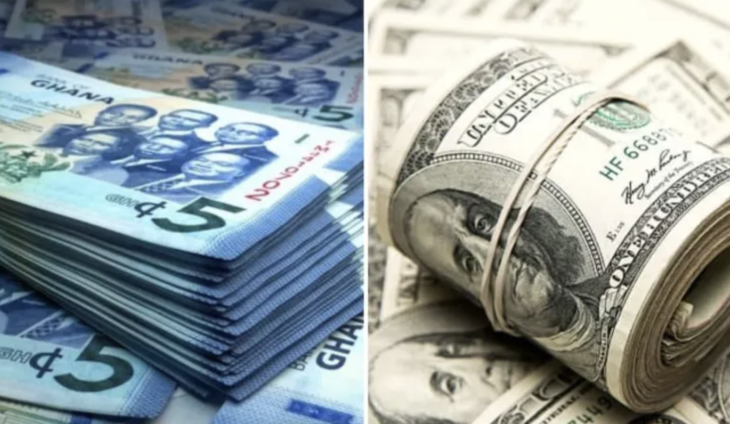
The cedi continued to lose value against major foreign currencies, pushing its year-to-date decline against the US dollar to 10.11% on the interbank market as demand for foreign exchange remained high.
Over two weeks, the cedi closed at interbank mid-rates of GH¢11.63 to the dollar, GH¢15.62 to the pound, and GH¢13.49 to the euro.
This represented losses of 3.01% against the dollar, 1.65% against the pound, and 1.56% against the euro.
The retail market showed a similar trend. The cedi weakened by 3.07% against the US dollar, 1.56% against the pound, and 1.49% against the euro.
It closed at average rates of GH¢12.20 to the dollar, GH¢16.05 to the pound, and GH¢14.10 to the euro.
“We note that the cedi’s depreciation exceeded our upper-band forecast of GH¢11.40 against the US dollar, as the central bank remained cautious about forex intermediation despite assurances from the International Monetary Fund of a likely US$385 million disbursement,” Database Research noted.
According to the research firm, the Bank of Ghana’s cautious approach may be aimed at protecting foreign reserves while waiting for more stable inflows, especially as forex demand remains strong.
“Looking ahead, we expect the cedi to trade largely on bearish expectations within a range of GH¢11.35 – 11.86/US dollar over the next two weeks [in the interbank market], with the path shaped by the balance between FX demand and the magnitude of supply into the market,” it further stated.
At the start of this week, the cedi was trading at GH¢12.20 to the dollar in the retail market.
Its year-to-date loss now stands at 0.20%.