Ghana is strengthening its position as a hub for Africa’s digital financial integration, with the Ghana Interbank Payment and Settlement Systems (GhIPSS) planning to expand cross-border payment connections and drive financial innovation across the continent.
Speaking at the 3i Africa Summit 2026, GhIPSS CEO Clara B. Arthur said Africa’s next phase of financial growth will depend on stronger links between countries’ payment systems.
“The future of digital finance lies in cross-border interoperability,” she said, adding that GhIPSS is prepared to connect Ghana’s instant payment system with others across Africa to support trade and economic growth.
Arthur said Ghana has made significant progress in building an inclusive and seamless payments ecosystem through strong cooperation between regulators and industry stakeholders.
She credited the Bank of Ghana for creating the regulatory framework that has allowed GhIPSS to introduce interoperable services such as mobile money transfers, instant payments, and domestic card services.
According to her, this partnership has made digital transactions faster, more affordable, and easier for users.
Using a trader at Makola Market as an example, Arthur explained that users now simply expect to receive mobile money regardless of the sender’s platform.
“That expectation reflects a system built on trust and efficiency,” she said.
To strengthen its infrastructure, GhIPSS is also migrating to the ISO 20022 global messaging standard.
The upgrade is expected to improve transaction data, speed up processing, and better align Ghana’s payment systems with global standards.
Ms. Arthur described the transition as a “strategic repositioning” that will make Ghana’s payment ecosystem more competitive and globally connected.
She also announced plans to work with virtual asset service providers under new legislation, signalling a cautious but progressive approach to regulated digital assets.
The GhIPSS CEO stressed that infrastructure alone cannot transform the financial sector, calling for stronger collaboration among fintechs, banks, and other financial institutions.
She encouraged institutions that are not yet connected to the national switch to join, noting that shared infrastructure lowers costs and supports scalable growth.
Arthur said the broader aim of Ghana’s digital finance agenda is to expand financial inclusion and economic participation.
She added that GhIPSS remains committed to providing the infrastructure needed to support innovation and broaden access to financial services.
“Digital finance must move beyond systems to deliver real impact in people’s lives,” she said.
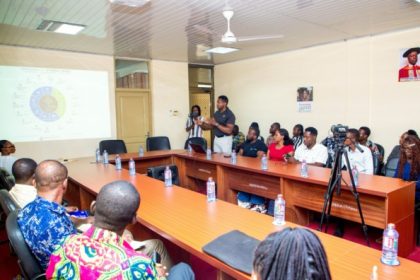
The 3i Africa Summit 2026 is ongoing in Accra, bringing together policymakers, central banks, fintech companies, and global partners to shape the future of financial innovation in Africa.