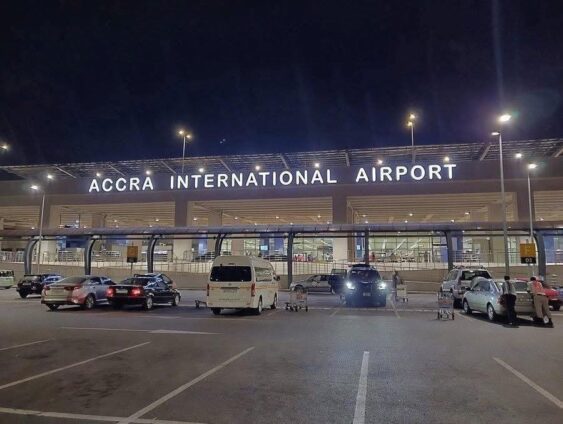
The Economic Community of West African States (ECOWAS) has opposed the new aviation taxes introduced by Ghana, warning that they go against agreed regional reforms and could harm the air transport sector in West Africa.
In a firmly worded letter signed by ECOWAS Commission President Omar Alieu Touray, it stated that Ghana’s new charges conflict with a binding regional decision aimed at lowering the cost of air travel among member states.
The letter points to Supplementary Act A/SA.2/12/24, under which ECOWAS leaders agreed to remove several air travel-related taxes such as ticket taxes, tourism levies, solidarity taxes, and overseas travel taxes starting in January 2026.
It also highlights a joint commitment by member states to reduce key aviation fees like Passenger Service Charges and security fees to make flying more affordable and strengthen regional integration.
ECOWAS noted that these reforms were supported by global aviation bodies and were driven by concerns that West Africa remains one of the most expensive regions in the world for air travel charges.
However, the Commission says Ghana has taken steps in the opposite direction.
“The ECOWAS Commission has therefore noted with concern that the Government of Ghana… imposed a new security charge of $18 on return ticket effective February 1st 2026,” the letter stated.
It also mentioned another charge:“Ghana Airport Company Limited has as of 1st April 2026, imposed an Airport Infrastructure Development Levy of $100 on return international travel.”
According to ECOWAS, these actions directly conflict with the regional agreement and established international aviation principles.
“Ghana’s imposition of those additional levies directly contravenes the letter and spirit of the afore-mentioned ECOWAS Supplementary Act,” it said.
The Commission also connected the issue to global aviation standards, referencing guidelines from the International Civil Aviation Organization that discourage excessive taxation in air transport.
It warned that the new charges could make flying even less affordable for passengers already dealing with rising aviation fuel costs.
“Rendering air travel unaffordable for many Ghanaians and West African travellers alike,” it stated.
ECOWAS argued that while such taxes may be intended to generate revenue, they could have the opposite effect.
“This situation is not boosting growth in demand for Air Transport in our region, but rather stifling passenger travel,” the Commission warned.
The letter also pointed to weak passenger traffic across major West African airports including those in Accra, Lagos, Abidjan, and Dakar arguing that high taxes are limiting demand despite the region’s large population.
“The major cause of suppressed demand in the ECOWAS Region” is “over taxation and excessive charges,” it said.
The Commission further warned that continued reliance on such taxes could push air traffic to competing hubs outside the region.
“The continued taxation of the Air Transport sector will only divert regional traffic to competing hubs,” it warned.
ECOWAS is now calling on Ghana to reconsider its approach.
“In light of the foregoing, the ECOWAS Commission urges the Government of Ghana to immediately suspend the newly imposed charges,” the letter stated.
It also encouraged Ghana to look into alternative ways of funding aviation infrastructure, such as partnerships with the private sector and support from development banks.
The matter is expected to be reviewed at upcoming regional meetings, with ECOWAS confirming it will present a progress report on how member states are implementing the agreed reforms.