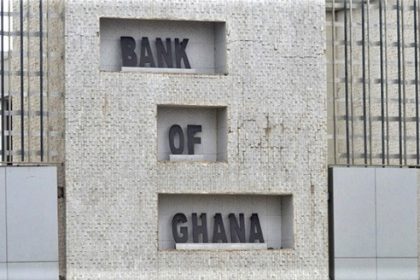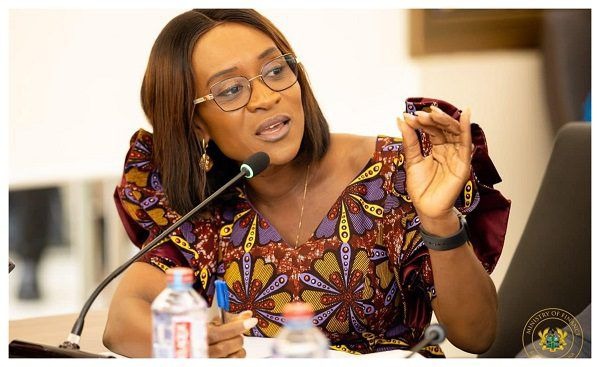
Former Deputy Finance Minister and current Chairperson of Parliament’s Public Accounts Committee, Abena Osei-Asare, has raised serious concerns about the financial health of the Bank of Ghana (BoG).
She warned that the bank’s growing losses could eventually shift the burden onto taxpayers if urgent steps are not taken.
In a Facebook post shared on Sunday, May 3, 2026, she reviewed the Bank’s 2025 audited financial statements and highlighted troubling figures.
She noted that the bank’s negative equity worsened significantly, rising from GH¢58.62 billion in 2024 to GH¢93.82 billion in 2025.
At the same time, its yearly losses increased from GH¢9.49 billion to GH¢15.63 billion.
She explained that although the central bank continues to operate, the situation should not be ignored or treated as just an accounting issue.
She pointed out that the government has already committed to fixing the bank’s financial position, which makes the matter even more important.
Referring to the Bank’s own report, she said the government plans to restore its capital over several years.
“The BoG’s own 2025 accounts acknowledge Government’s obligation to restore the capital base through a phased recapitalisation programme from 2026 to 2032,” she stated.
She stressed that this plan will have wider effects on the country’s finances. According to her, the cost of fixing the bank could eventually fall on citizens.
“That means today’s losses become tomorrow’s taxpayer cost, debt instrument, or fiscal trade-off,” she said.
Mrs. Osei-Asare described the GH¢93.82 billion negative equity as a serious warning sign. She emphasised that even if the bank continues to function, the financial gap remains a national concern. “A functioning central bank with a GH¢93.82 billion negative equity hole is still a public finance problem, regardless of its operational continuity,” she stressed.
She also called for transparency in how the government plans to recapitalise the bank. She wants details about any agreements, bond issuances, cash support, or debt write-offs to be made public. “I demand publication of the full recapitalisation MoU and the fiscal implications of any bonds, cash injections or write-offs,” she said.
In addition, she urged key parliamentary committees to take action. She asked them to invite the Governor of the Bank of Ghana, the Finance Minister, external auditors, and other officials to explain the situation.
She insisted that any plan involving public funds must go through proper parliamentary oversight.
Finally, she reminded leaders that citizens deserve clarity and accountability. “The public is entitled to know who is responsible, on what terms, and at what cost to the taxpayer,” she said.