The Bank of Ghana has cautioned that Ghana’s remaining external debt restructuring negotiations could create short-term external payment pressures, potentially testing the cedi and increasing the country’s future debt servicing obligations despite improving fiscal performance.
In its May 2026 Monetary Policy Report, the central bank said the completion of the outstanding debt restructuring negotiations may have implications for the domestic currency and require stronger domestic savings to meet future external debt service obligations.
It stressed that sustained accumulation of foreign exchange reserves will be critical to meeting upcoming external debt payments and safeguarding macroeconomic stability.
The warning comes even as the Bank reports encouraging signs that the government’s fiscal consolidation programme is beginning to gain traction.
According to the report, fiscal targets were achieved in the first quarter of 2026 despite concerns over revenue performance and the pace of expenditure execution.
It noted that revenue collections began strengthening in April following the rollout of new revenue measures announced in the 2026 Budget.
The central bank attributed the improvement to the deployment of technology and artificial intelligence to plug revenue leakages and improve the efficiency of tax administration.
It also expects tighter expenditure controls as government expands its commitment authorisation system and operationalises its value-for-money initiative to enhance spending discipline.
Despite the improving fiscal outlook, the Bank identified commodity price volatility and heightened geopolitical tensions as additional risks that could weigh on government’s fiscal performance.
It added that sustained fiscal discipline, stronger economic growth, lower real interest rates and exchange rate stability remain essential to achieving medium-term debt sustainability.
The report also highlighted the improvement in the public finances. Government recorded an overall budget surplus of GH¢1.709 billion on a commitment basis in the first quarter of 2026, equivalent to 0.1 percent of GDP, outperforming the projected deficit of GH¢18.578 billion, or 1.2 percent of GDP.
The corresponding primary balance also posted a surplus of 1.2 percent of GDP, significantly above the target of 0.2 percent.
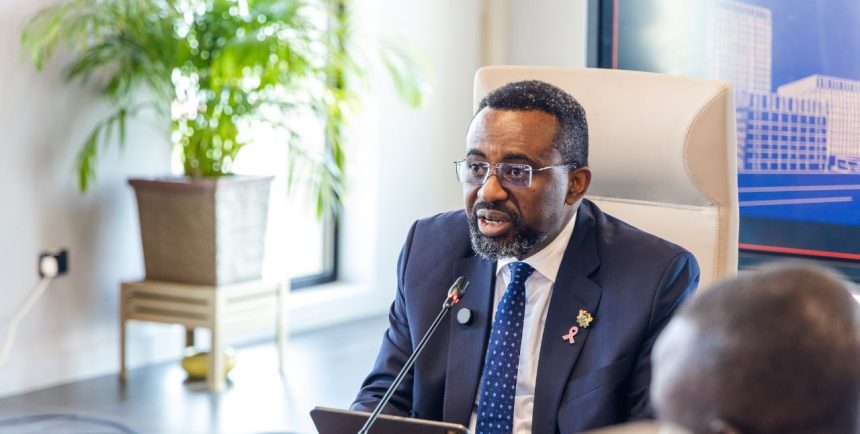
Meanwhile, Finance Minister Dr. Cassiel Ato Forson has sought to reassure investors that government has built sufficient financial buffers to meet upcoming debt obligations.
Speaking during Vice President Professor Naana Jane Opoku-Agyemang’s visit to the Ministry of FinanceOn Thursday July 9,2026, he disclosed that government is prepared to meet about GH¢10 billion in debt repayments due in August and an estimated GH¢54 billion maturing in 2027.
He added that Ghana has already honoured about US$1.4 billion in Eurobond repayments this year and remains on course to meet all future debt obligations without default.