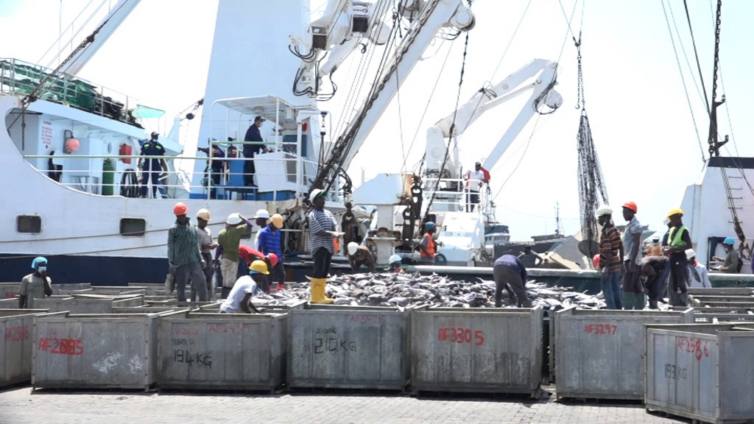
Ghana’s tuna fishing industry is facing severe operational challenges, with all 20 hook-and-line vessels currently out of operation amid rising costs, limited local expertise and difficulties securing bait.
The development has left only 17 purse seine vessels operating out of Ghana’s allocation of 37 tuna vessels under the International Commission for the Conservation of Atlantic Tunas (ICCAT).
Richster Amarh Amarfio, a member of the Tuna Association and Vice President of the National Fisheries Association of Ghana (NAFAG), disclosed the situation in an interview.
He said the increasing cost of operations was putting significant pressure on fishing companies, particularly through fuel, labour, maintenance, licensing and security expenses.
According to him, tuna vessels purchase fuel at the full market price, with fuel currently costing about GH¢18 per litre.
A single vessel can consume as much as 270,000 litres on a fishing trip, resulting in fuel expenditure running into millions of cedis.
The industry is also facing a shortage of specialised local personnel. Mr Amarfio said Ghana continues to depend heavily on foreign expertise, with all tuna vessel captains currently being Korean.
Licensing fees have also increased sharply, rising from US$35 to US$135 per gross registered tonnage. For a 1,000-GRT vessel, this translates into a licence cost of US$135,000.
Hook-and-line operators have also struggled to secure live anchovies for bait. Restrictions on using light as an aggregating device have made bait collection harder, with some vessels spending weeks searching for bait before beginning tuna fishing.
The challenges extend to maintenance, with vessels reportedly facing long waits for dry-dock services.
The decline in tuna landings could also affect local processors such as Pioneer Food Cannery and Cosmo Foods, which depend on locally caught fish for production.
The industry is therefore calling attention to the growing pressures facing Ghana’s tuna fleet and its wider implications for the country’s fishing and processing sectors.