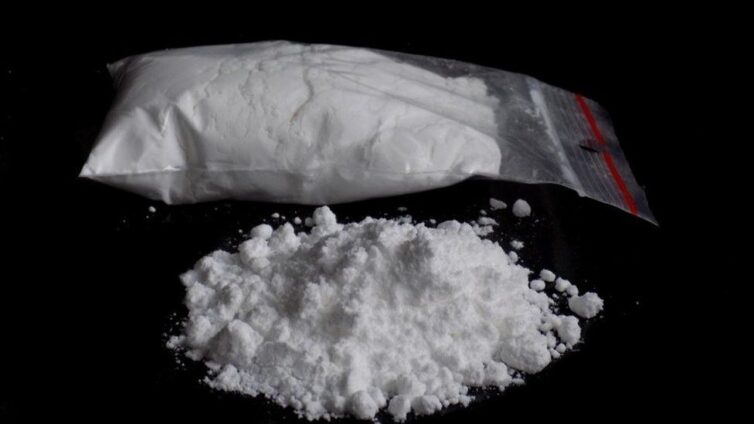
Ghana risks suffering reputational damage and increased international scrutiny if it fails to intensify efforts to combat drug trafficking, an international relations expert, Dr. Ishmael Hlovor, has warned.
Dr. Hlovor, a lecturer at the University of Education, Winneba, said Ghana must strengthen security cooperation and implement tougher measures to prevent drug traffickers from using the country as a transit point.
His comments come amid concerns over recent drug seizures linked to Ghana, with calls for the government to move beyond public statements and adopt more concrete measures to address the problem.
Speaking on Good Afternoon Ghana on Metro TV, Dr. Hlovor stressed the need for intelligence sharing, joint security operations and improved institutional capacity to tackle drug trafficking, which he described as a complex transnational crime.
“We have to continue our intelligence sharing. We have to continue our joint operations and try to contain it,” he said.
He also urged countries in the West African sub-region to adopt a comprehensive approach to tackling drug trafficking, noting its links to other organised crimes, including money laundering, human trafficking, terrorism, piracy and small-arms trafficking.
“You cannot address one without the other, because money from drug trafficking can go into the smuggling of terrorists, can go into piracy and all those fronts,” Dr. Hlovor noted.
To strengthen Ghana’s response, he called for increased investment in security agencies, particularly the Marine Police and the Air Force, alongside the provision of modern equipment to port authorities to enhance their capacity to detect and intercept illicit drug shipments.
Dr. Hlovor further advocated coordinated regional strategies through the Economic Community of West African States (ECOWAS), arguing that cooperation among member states was essential to addressing drug trafficking and its associated crimes.
He noted that some coastal countries in the sub-region face significant challenges in securing their territorial waters due to limited resources and operational capacity, making regional collaboration and investment in security infrastructure imperative.
Beyond strengthening security operations, the international relations expert emphasised the need for political commitment to identify and prosecute individuals involved in drug trafficking networks and related financial crimes.
But more importantly, we must have the political will to do it,” he stressed.
He also highlighted the importance of tackling money laundering, warning that proceeds from drug trafficking could be channelled into legitimate businesses and investments, making it difficult for authorities to trace illicit financial activities.
On Ghana’s diplomatic response to the drug trafficking concerns, Dr. Hlovor maintained that public statements must be supported by concrete action to safeguard the country’s international reputation.
“The most important communication will be that you are actually arresting, making it more difficult for people to use your territory to transit and to commit some of these offences,” he said.
While acknowledging that completely eliminating drug trafficking may be unrealistic, he urged Ghana to intensify its efforts to reduce such incidents to the barest minimum.
“You can’t get it 100 percent. Let’s be honest,” he said.
Dr. Hlovor cautioned that continued international suspicion over Ghana’s possible role as a source or transit point for illicit drugs could undermine the country’s reputation, regardless of efforts to manage the diplomatic fallout.
“No matter the words you put out there, if the international community suspects that more drugs are coming from your end, no communication can wash your image,” he cautioned.