The Institute for Fiscal Studies (IFS) has raised concerns about the implementation of Ghana’s 2026 Mid-Year Budget, pointing to weak budget execution, unrealistic economic targets and inconsistencies in the government’s fiscal data.
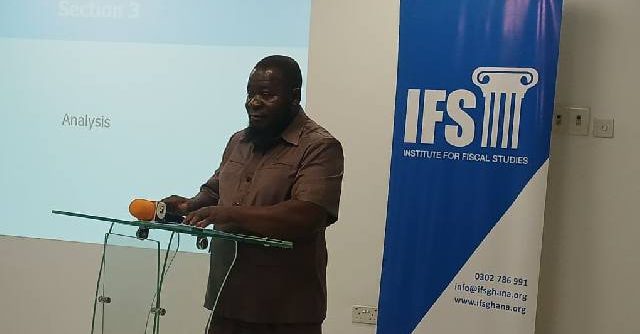
The concerns were raised by Dr. Said Boakye, Senior Research Fellow and Acting Executive Director of the IFS, during a review of the Mid-Year Budget.
Dr Boakye acknowledged improvements in the country’s economic conditions during the first half of 2026, including a decline in inflation to 5.3% in June and a significant reduction in interest rates.
However, he said the government’s inability to spend according to its budget could affect economic growth.
According to him, the government planned to spend GH¢172.5 billion, including payments for arrears, during the first six months of the year.
However, actual expenditure was GH¢35.6 billion lower than planned, representing a 20.6% shortfall.
Capital expenditure recorded a shortfall of GH¢40.35 billion, while arrears payments were GH¢8.64 billion below target. Dr Boakye said the reduced spending on these areas could slow economic activity and growth.
He attributed much of the spending gap to domestic financing, which fell 67.2% below expectations. He also questioned the decision to place GH¢15.6 billion into a sinking fund that was not included in the budget.
The IFS also criticised the government’s revenue and economic growth projections. It said the 16.8% revenue-to-GDP target was difficult to achieve, given that the ratio has remained below 16% since 2015.
The institute also questioned the 4.8% real GDP growth target, arguing that stronger growth figures recorded in 2025 and the first quarter of 2026 should have led to an upward revision.
Additionally, the IFS identified inconsistencies in the budget figures, including differences in revenue and tax refund calculations.
The institute has therefore called for better budget execution, realistic forecasting, stronger data validation and an independent review of government projections.
It also urged government to develop a strategy to generate royalties from the small-scale mining sector, which it said contributed significantly to Ghana’s gold exports without generating royalties for the state.