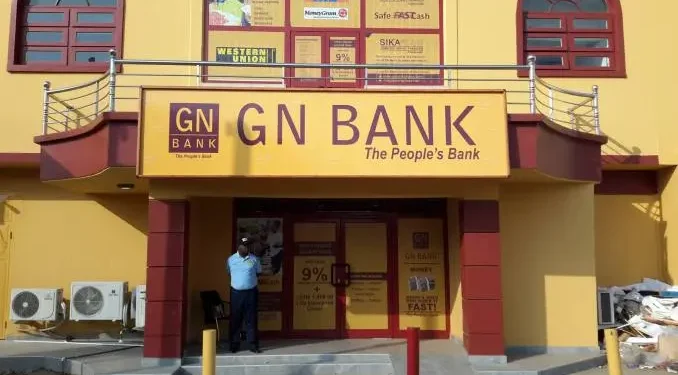
The Supreme Court has suspended the execution of the Court of Appeal’s judgment, which reinstated the licence of GN Savings and Loans Company Limited.
This latest order from the Supreme Court will remain effective until the final resolution of the substantive issues currently before it regarding this matter.
As a result of this ruling from the highest court, GN Savings and Loans Company Limited must temporarily cease the execution of the orders issued by the Court of Appeal in June this year.
In June 2026, the Court of Appeal unanimously reinstated the licence of GN Savings and Loans Company Limited.
This decision followed a ruling by a three-member panel of the second-highest court, which overturned the High Court’s decision that had upheld the revocation of the licence because the revocation was unjust and unreasonable.
The court also mandated that the receiver return possession, management, and control of the assets and other operations to the company’s shareholders.
On January 4, 2019, GN Bank Limited was reclassified as a savings and loans company and subsequently renamed GN Savings and Loans Company Limited.
Seven months later, on August 16, 2019, the Bank of Ghana (BoG), under the leadership of Dr. Ernest Addison, revoked the operating licence of GN Savings and Loans Company Limited and appointed Eric Nana Nipah as Receiver as part of the banking sector clean-up initiative.
In the same month, Groupe Nduom, the owners of GN Savings and Loans Company Limited, led by Dr. Papa Kwesi Nduom, contested the licence revocation in the High Court in Accra.
The application against the Bank of Ghana, the Attorney General, and the Receiver of the savings and loans companies requested the High Court to overturn the BoG’s decision to revoke the licence of GN Savings and Loans, arguing that the action constituted a violation of his fundamental human rights.
The court, led by Justice Gifty Addo Adjei, stated in its judgment regarding the case that the Central Bank acted appropriately in revoking the licence of the third respondent, as it had become evident that the entity was incapable of fulfilling its debt obligations due to inadequate governance structures.
Initially, the lawyers representing the Bank of Ghana (BoG) raised a legal objection to the application, arguing that the High Court’s jurisdiction had been improperly invoked.
Dr. Justice Srem Sai, counsel for Dr. Nduom, contended that the actions taken by the BoG and its agent, including the receiver of the savings and loans companies, constituted a clear infringement of his human rights.
The legal representatives for the Central Bank and the Attorney General asserted that the court’s jurisdiction had been incorrectly invoked, as issues related to banking revocation were expected to be resolved through arbitration at the Arbitration Centre.
However, Justice Srem Sai, who served as the lawyer for GN Savings and Loans at that time, countered this argument.
The court determined that the applicant failed to demonstrate that it was solvent and capable of meeting its debt obligations at the time its licence was revoked.
Justice Addo Adjei remarked that the applicants’ claims of unreasonableness, along with allegations of malice and violations of existing laws during the revocation process, were baseless.
Regarding the infringement of administrative justice rights, the court opined that the Central Bank’s intervention in the applicants’ operations through the revocation of the licence was in accordance with the provisions of Article 130 of the 1992 Constitution.
“No illegality was occasioned by the conduct of the Central Bank in revoking the licence in the face of insolvency,” she stated.
She further noted that the BoG had not violated the fundamental principles inherent in its status.
The court stated that the Central Bank made the most reasonable and equitable decision in response to the liquidity challenge, in line with its mandate.
Regarding the issue of discrimination, the court determined that the applicants were not subjected to discrimination, as other entities experienced a similar outcome as the applicants.
The court asserted that the applicant was not discriminated against and that their complaints were baseless and without merit.
It indicated that the applicants could pursue the matter of the debt owed to them by the government through the Finance Ministry, despite their claims that multiple attempts to recover their funds from the government had been unsuccessful, making it unreasonable for the BoG to have revoked their license given their situation.
This decision was contested by Dr. Nduom, represented by his counsel Cletus Alengah, at the Court of Appeal.