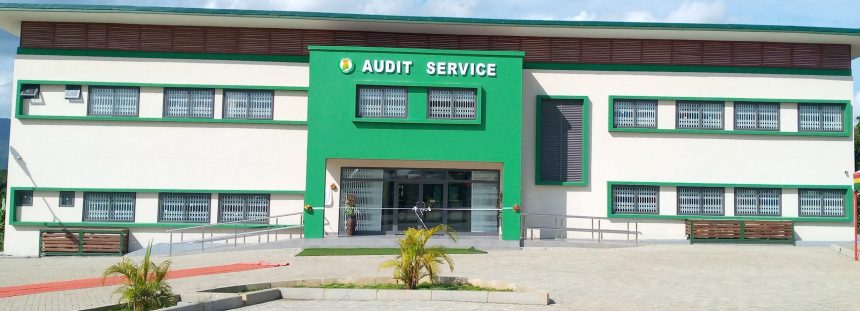
Ghana recorded its highest level of public financial irregularities in five years in 2025, with the Auditor-General identifying losses exceeding GH¢5.26 billion, largely driven by tax-related infractions.
The findings are contained in the Auditor-General’s Report on the Public Accounts of Ghana for Ministries, Departments and Agencies (MDAs) for the financial year ending December 31, 2025.
The report reveals significant weaknesses in financial management and compliance across several public institutions.
According to the report, total financial irregularities reached GH¢5,266,315,079, representing a sharp increase from the approximately GH¢2.06 billion recorded in 2024.
The 2025 figure is the highest recorded over the past five years.
Tax irregularities accounted for the overwhelming share of the losses, amounting to GH¢4.8 billion, or more than 91 percent of the total irregularities.
The Auditor-General also identified an additional US$154,976 in tax-related discrepancies.
Aside from tax losses, the report cited GH¢410.7 million in cash irregularities, while debts, loans and advances amounted to GH¢29.3 million.
Payroll irregularities stood at nearly GH¢20 million, raising concerns about possible unauthorised salary payments and deficiencies in payroll administration.
Further financial lapses were recorded in contract management, stores administration and rent collection, pointing to persistent weaknesses in internal control systems across government institutions.
The report also highlights a worrying upward trend in financial irregularities over the past five years.
Total irregularities increased from GH¢1.08 billion in 2021 to GH¢1.41 billion in 2022 before rising sharply to more than GH¢2.4 billion in 2023.
Although the figure dropped slightly to around GH¢2.06 billion in 2024, it more than doubled in 2025 to a record GH¢5.26 billion.
Tax-related losses have been the primary driver of this trend.
They rose from GH¢989 million in 2021 to GH¢1.25 billion in 2022 and GH¢2.16 billion in 2023. After declining to GH¢1.58 billion in 2024, they surged dramatically to GH¢4.8 billion in 2025.
Cash irregularities also followed an upward trajectory, increasing from GH¢45.8 million in 2021 to GH¢410.7 million in 2025, underscoring growing concerns over financial accountability and public sector oversight.