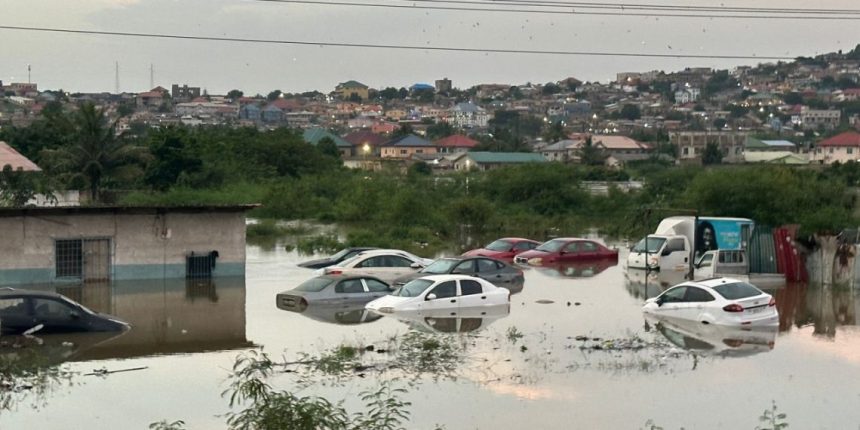
The Director of Communications at Ghana Water Ltd. (GWL), Stanley Martey, has attributed the persistent flooding in Weija and surrounding communities to poor land-use practices and weak enforcement of planning regulations rather than the controlled spillage of the Weija Dam.
His remarks follow concerns raised by residents who believe recent flooding incidents were triggered by the release of excess water from the dam after heavy rainfall.
The flooding has displaced several households and reignited debate over the management of the dam.
However, Stanley Martey rejected claims that the dam’s spillage is the main cause of the devastation.
According to him, Weija has long been identified as a flood-prone area, and the recent heavy rains have significantly contributed to the current situation.
He explained that widespread encroachment on waterways and buffer zones has worsened the impact of flooding.
Despite repeated warnings from authorities, some residents continue to construct buildings in unauthorised locations, including natural drainage channels that are essential for the free flow of water during heavy rains.
The director expressed concern over the failure of local authorities to effectively enforce building regulations.
He argued that unauthorised developments should have been prevented or demolished before they became a threat to lives and property.
In his view, inadequate enforcement has allowed encroachment on waterways to continue unchecked, increasing the vulnerability of communities to flooding.
Defending Ghana Water Ltd.’s operational procedures, he emphasised that controlled spillage from the dam is a necessary safety measure.
He warned that withholding excess water could place immense pressure on the dam structure and potentially lead to a catastrophic collapse, resulting in far greater destruction than the flooding currently being experienced.
He revealed that the Weija Dam has been undergoing continuous spillage since April 2025 due to sustained inflows from the Densu River.
He noted that rainfall in the Atiwa Forest, where the river originates, continues to affect water levels in the dam, making it difficult to determine when the spillage will end.
To address the recurring flooding, he called for a coordinated response involving the evacuation of residents from high-risk areas, the demolition of illegal structures, the dredging of waterways, and the restoration of protective buffer zones around water bodies.
He stressed that these measures are essential to reducing future flood risks in Weija and neighbouring communities.