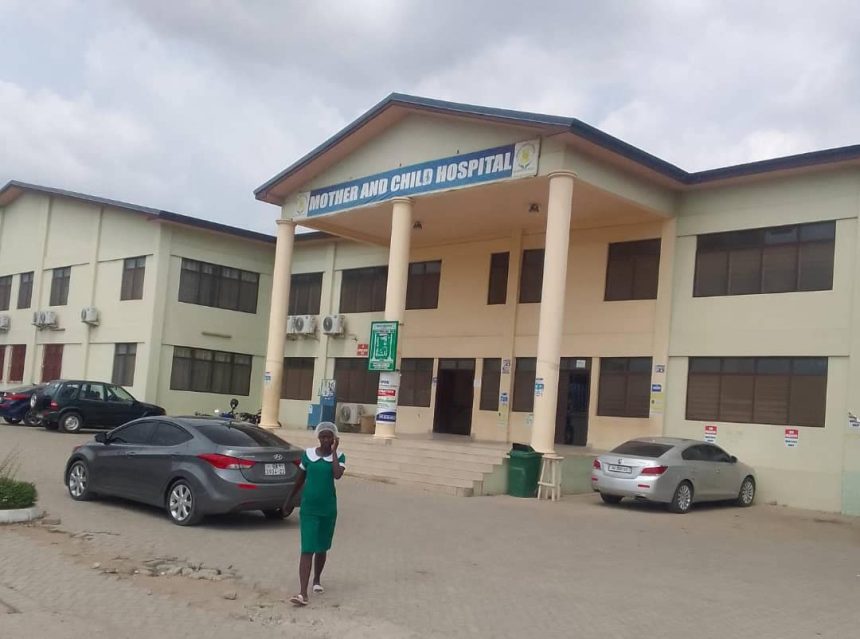
A tragic incident has shaken residents of Kasoa following the death of a pregnant woman, Abigail Opoku, who reportedly lost her life and the unborn baby after being denied a caesarean section at the Mother and Child Hospital.
According to family members, Abigail, believed to be in her late twenties, first visited a private health facility when she went into labour.
However, after her condition worsened due to prolonged labour, she was referred to the Mother and Child Hospital in Kasoa for further care.
Upon arrival, her relatives say they requested an emergency caesarean section, but hospital staff allegedly declined, citing a lack of available beds in the recovery ward.
The family claims Abigail was left waiting in severe pain for hours without the needed surgical intervention. Sadly, she later died with her unborn baby.
Authorities have since indicated that an investigation will be conducted to establish the facts surrounding her death. The family is also demanding justice, insisting that timely medical attention could have saved both mother and child.
The case has once again brought attention to Ghana’s long-standing “no bed syndrome.” This refers to situations where patients in critical condition are unable to receive care because hospitals lack available beds, space, or essential resources.
READ ALSO: GHS launches probe into death of pregnant woman at Kasoa hospital
Over the years, several similar cases have been reported across the country, some ending in preventable deaths. The recent one was when a man knocked down by a vehicle was turned away at Korle Bu Teaching Hospital because there was no bed.
This problem is more common in rapidly growing communities like Kasoa, where population growth has outpaced the expansion of health facilities. Many hospitals are overstretched, with limited wards, staff shortages, and pressure on emergency units.
The death of Abigail Opoku has become a painful reminder of the urgent need to fix gaps in the country’s healthcare system.