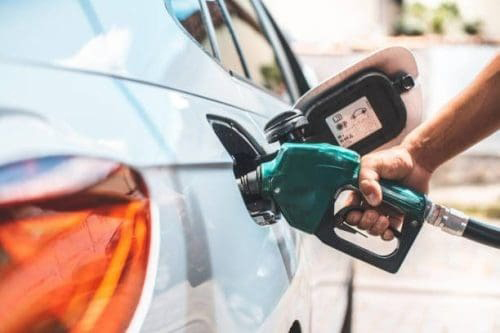
UK inflation rose to its highest level in five months in August 2026, driven largely by increases in petrol, diesel and airfares.
According to the Office for National Statistics (ONS), inflation increased to 3.1% in the year to August, up from 2.9% in July.
The cost of filling up vehicles rose sharply during the month as the conflict in the Middle East continued to disrupt global oil supplies.
Petrol prices reached their highest level in nearly four years, while diesel prices also recorded a significant increase.
Overall, motor fuel prices were 23% higher than in August last year.
Oil prices rose above $91 a barrel as the US-Israel war with Iran continued, compared with about $73 before hostilities began earlier this year. Brent crude, the global oil benchmark, has since surpassed $100 a barrel.
Average petrol prices increased by 9.1 pence per litre between July and August to 161.3p.
“This is the highest price recorded since November 2022,” said the ONS.
At that point, Russia’s full-scale invasion of Ukraine had pushed up global energy costs.
Airfares also increased during August, traditionally one of the busiest months for summer travel.
Capital Economics said higher oil prices had so far not significantly affected other areas such as food and drink, where inflation remained at 1.3%.
However, its chief UK economist, Paul Dales, said, “Everyone knows that bigger rises in inflation are on their way”.
Grant Fitzner, chief economist at the ONS, also said rising crude oil and petrol prices increased both the annual cost of raw materials and the price of goods leaving factories, respectively.
Dales estimates that higher oil and gas prices, combined with businesses passing on some of their increased energy costs, could push inflation to 4.2% in January.
For petrol station operators, rising oil prices are also putting pressure on businesses.
The latest rise takes inflation further above the Bank of England’s 2% target. The Bank is due to meet on Thursday to decide whether to change its current interest rate of 3.75%.
Prime Minister Andy Burnham described inflation as “a concern” but said the underlying economy remained resilient.
The UK economy grew by 0.4% in July, although growth for the April-to-June quarter slowed to 0.4% from 0.6% in the first quarter.
The government is also set to cut VAT on household electricity bills from 5% to zero on 1 October, saving a typical household about £45 a year.
However, the energy price cap for electricity and gas will rise by 4%, adding about £60 a year to the typical household’s bill.
KPMG chief economist Yael Selfin said the VAT cut would only partly offset higher gas prices.
“If gas prices remain around current levels, household energy bills could rise by a further double-digit amount from January, with an even larger increase possible if wholesale prices climb further,” she said.