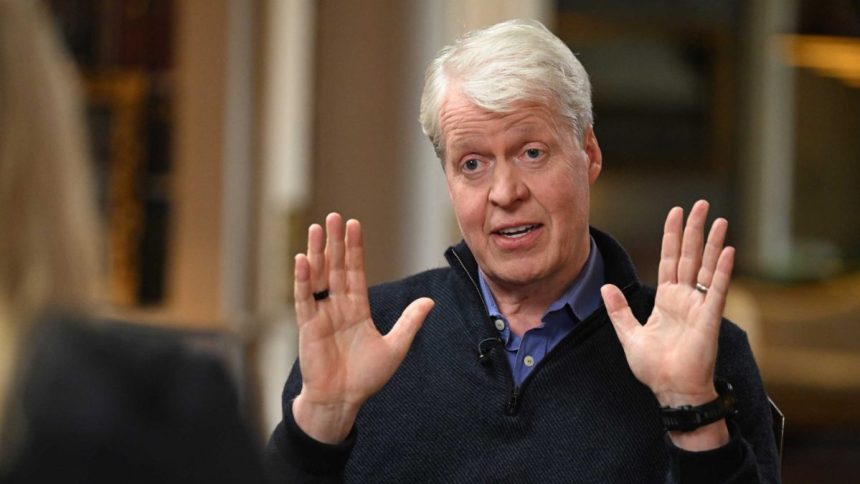
A bitter public dispute may be uncomfortable for the royals, but for Earl Spencer, it appears to have given his new book about his sister Princess Diana an extraordinary amount of attention.
For six days, Earl Spencer has traded accusations and counter-claims with the Royal Family, generating widespread coverage even before Swan Song: Diana, My Sister is officially published.
The controversy has also pushed the book rapidly up Amazon’s best-seller chart, making it one of the most closely watched royal books since Prince Harry’s 2023 memoir, Spare, and Andrew Lownie’s 2025 book, Entitled.
At the centre of the dispute is a simple but difficult question: whose account should the public believe?
Earl Spencer has made claims about King Charles III’s conduct following Diana’s death, while Buckingham Palace has issued a strong denial.
But beyond the row, his book offers a more personal account of Diana’s life, struggles and relationship with the Royal Family.
Spencer portrays his sister as caring and generous but deeply affected by self-doubt, eating disorders and what he describes as a lack of warmth from her new royal family.
He also blames the intense attention of the tabloid press for contributing to her suffering.
“She craved acceptance, admiration, kindness, and – perhaps above all – love,” writes Charles Spencer about Diana.
“She got stuck into gritty, controversial, but crucial causes partly because she had a fine, natural social conscience, but also to assuage nagging feelings of worthlessness.”
The book also contains striking personal revelations.
Spencer claims Diana once pushed their stepmother, Raine Spencer, down a staircase at their family home after Raine allegedly told her: “I have always felt so very sorry for the Prince of Wales, marrying someone quite as stupid as you”.
He also recounts Diana’s alleged dislike of businessman Mohamed Al-Fayed, claiming she accused him of crudely groping her.
The book reveals some of Diana’s more ordinary interests, including her love of David Bowie, the soap opera Crossroads and The Sound of Music, which Spencer says she watched 16 times.
Yet the most powerful sections concern Diana’s death and funeral.
Spencer recalls deliberately pretending to have lost his funeral speech during a rehearsal so nobody could hear it beforehand and attempt to soften his criticism of the press and the Royal Family.
He also says he personally contacted tabloid editors to withdraw their invitations to Diana’s funeral at Westminster Abbey after her death.
His account presents Diana’s story as both deeply personal and inseparable from the institution into which she married.
For Spencer, Diana was not simply a princess or global celebrity.
She was his younger sister, a childhood companion whose life changed dramatically after entering the Royal Family at just 20.
That may ultimately be the most revealing theme of the book: behind the endless royal headlines was a young woman whose private struggles became public property.
Nearly three decades after her death, the public still receives competing versions of who she was, what happened inside the Royal Family and who was responsible for the misery surrounding her final years.
Spencer’s book adds another powerful voice, but it does not end those arguments. Instead, it risks reopening them.
And perhaps that is the uncomfortable truth behind the extraordinary attention surrounding the book: Diana remains not only a historical figure, but a battleground for competing memories of the monarchy.
And for Earl Spencer, the title that appears to have shaped his life most profoundly may not be his aristocratic title at all.
It is simply “Diana’s brother”.