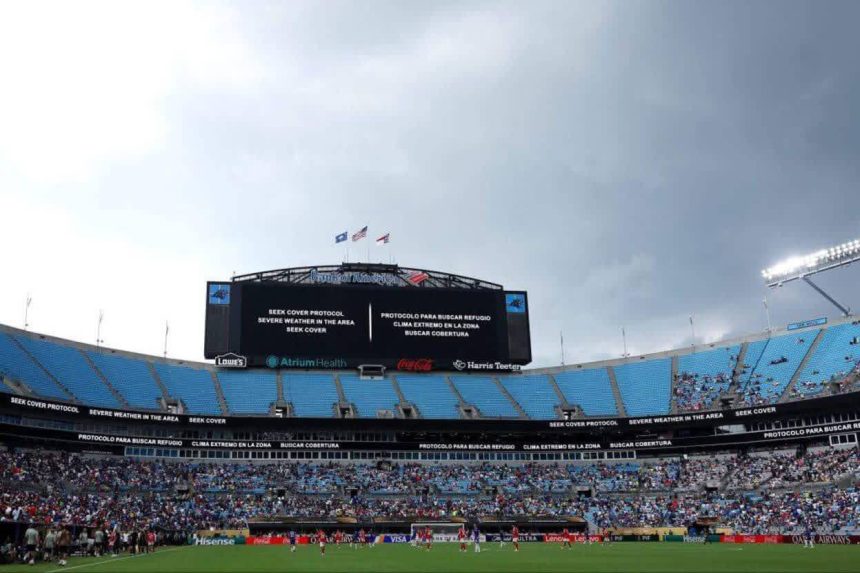
Fans attending the 2026 FIFA World Cup in the United States may have to prepare for lengthy match delays as strict lightning safety regulations could significantly disrupt games during the tournament.
Reports indicate that under U.S. thunderstorm safety protocols, any lightning strike or electrical discharge detected within an eight-mile radius of a stadium will trigger an immediate suspension of play.
Players will be directed to the dressing rooms, while spectators will be moved to designated safe areas inside the venue.
The match can only resume after 30 consecutive minutes pass without another lightning strike. If lightning is detected again during that period, the countdown resets, potentially causing delays lasting several hours.
The issue has drawn attention ahead of the expanded 2026 FIFA World Cup, which will be jointly hosted by the United States, Canada, and Mexico.
The tournament will feature 48 teams for the first time and will be played across 16 host cities. Several host locations, particularly in the United States, are known for frequent summer thunderstorms, raising concerns about weather-related interruptions.
Weather disruptions are not a new challenge for football competitions in North America. During the FIFA Club World Cup held in the United States in 2025, several matches experienced significant delays because of severe weather conditions, including thunderstorms and lightning.
In one notable case, a match involving Chelsea was halted for more than two hours before play could resume.
Experts note that FIFA cannot override local safety regulations, meaning tournament organizers must comply with U.S. weather protocols.
The rules are designed to protect players, officials, and supporters from the dangers of lightning strikes, which remain a serious safety concern during outdoor sporting events.
While some World Cup matches will be played in indoor or roof-covered stadiums, many fixtures are scheduled for open-air venues where weather conditions could have a direct impact.
As a result, fans, teams, broadcasters, and tournament organizers may need to remain flexible throughout the competition.