It is a simple document, confirming that its holder has no criminal record, and the law says it should take five working days.
He began on a Monday morning, expecting nothing more dramatic than a short queue and a stamp.
Three weeks later, he had visited Ghana Police Service headquarters four times, been sent to two different offices, been told his file could not be found, and been asked to resubmit papers he had already handed in.Susu contribution tracking
The job offer’s deadline passed while he was still waiting.
Nobody explained why.
Nobody apologised.
Goal Rush – Compu Ghana
The institution had processed his application exactly the way it always does. It simply had not processed it in a way that served him.
If this story sounds familiar, that is because it is.
It is close to the median experience of the average Ghanaian dealing with a public office — and it is not, as it is often described, a small failure of customer service.
It is a breach of something much larger: the basic bargain between citizen and state.
That bargain, the social contract, is old and simple.
Citizens pay their taxes, obey the law, and in return the state provides roads, schools, hospitals, and the everyday administration that lets ordinary life function.
It is not written down anywhere in particular, but every taxpayer understands it, and so does every public servant who collects a salary because of it.
For many Ghanaians, the state has been quietly breaking that bargain — not through dramatic scandal, but through the accumulation of small indifferences.
The office that takes the tax but makes the taxpayer wait three hours to file it.
The agency that requires a licence but makes obtaining one so complicated that only those with connections can manage it.
The hospital that is built but staffed by officers who treat patients as interruptions to their day.
None of these, on their own, makes headlines.
Together, they add up to a citizen who no longer believes the state is on their side.
Experience
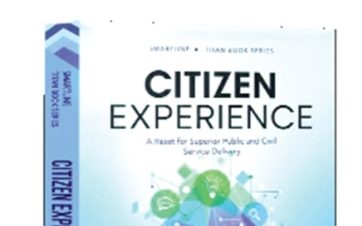
Citizen Experience is the name a new book — written by this column’s two authors — gives to this accumulated reality: every form, every counter, every phone call, every portal, every wait, and the overall sense they leave behind about whether the state sees the citizen in front of it or merely processes a file number.
The most common mistake in fixing this problem is to treat it as a training issue — send the officer at the counter on a customer service course, put up a suggestion box, and hope the queue moves faster.
These steps rarely work, because the officer is usually not unhelpful by nature.
They are unhelpful because they work inside a system that never measures them by whether the citizen was actually served, never rewards them for solving a problem on the spot, and rarely gives them the authority to do so.
Training the individual treats a symptom.
Redesigning the system treats the disease.
That is why President Mahama’s Black Star Experience Initiative matters.Executive Branch
Described by Dr Julius Debrah at the inaugural CXX Awards in October 2025 as a national framework for embedding citizen experience into governance, it signals something bigger than a new slogan: recognition, from the very top of government, that how the state makes citizens feel is not a side issue but a measure of how well the state itself is functioning.
The book sets out seven things worth checking in any public office a citizen deals with.
Can they reach the service at all — does someone in Bawku get the same treatment as someone in Accra?
Is it clear what is required, or must citizens discover the rules through trial and error?
Is it fast, taking only as long as the process genuinely needs?
Is it dignified, with every citizen treated courteously regardless of who they are?
Is it fair, run the same way for the well-connected and the ordinary citizen alike?
Is it consistent from one visit to the next, and from one office to another?
And, above all, does the citizen actually walk away with what they came for?
Ghana has been having this conversation for more than 20 years.
Service charters were promised in 2005. Utility companies were told to improve in 2011.
A president criticised public sector attitudes sharply in 2017.Susu contribution tracking
As recently as 2025, a report by CUTS International found that most citizens still do not know their rights or how to complain when things go wrong, and called for a full reset of public sector service.
None of this reflects a lack of concern at the top.
It reflects the absence, until now, of a framework that connects decisions made in offices in Accra to what an ordinary citizen actually experiences at a counter in their own community — and that holds institutions to account for that experience, not just for the reports they file about themselves.
The consequences run deeper than frustration on any single morning.
When citizens consistently find the state accessible, clear, fast, dignified, fair, and reliable, trust grows, and with it their willingness to pay taxes, obey rules, and engage honestly with public institutions rather than seeking shortcuts around them.
When they find the opposite, trust erodes, and that erosion shows up in everything from lower tax compliance to the informal payments that keep dysfunctional systems limping along.
Citizen experience, in short, is the new social contract: what the state owes every citizen in exchange for their taxes, their obedience to the law, and their consent to be governed.
Kofi’s three weeks were not simply bad luck.
They were the state failing to keep its side of the deal — and the argument of this book is that the deal can, and must, be kept.