That if the plastic food pack you used this morning, the takeaway container from your favourite food joint, or the plastic bottle you carried to work could become part of a much bigger environmental problem?
As a final-year Biochemistry and Molecular Biology student at the University of Health and Allied Sciences (UHAS), I have come to appreciate how scientific research continues to uncover environmental problems that are often difficult to see.
One of these concerns is microplastic pollution.
In Ghana, plastic is part of our everyday lives. We use plastic bottles, shopping bags, food containers, sachet-water packaging and polystyrene food packs almost every day.
Polystyrene packs, commonly used for packaging takeaway foods, are particularly noticeable because they are lightweight, inexpensive and convenient.
However, when these materials are poorly disposed of, they can contribute to the growing plastic waste problem.
Problem
The problem becomes even more serious when we consider what happens after these plastics are thrown away.
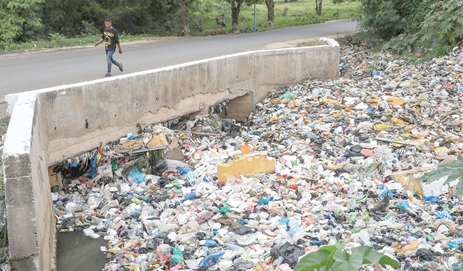
During heavy rainfall, plastic waste can be washed from streets, markets, homes and gutters into drains and watercourses.
When drains become blocked with plastic bags, food packs, bottles and other waste, the flow of rainwater can be restricted.
In a country like Ghana, where flooding continues to affect communities during periods of heavy rainfall, poor waste disposal can make an already difficult situation worse.
This means that the plastic food pack we casually throw away does not simply disappear.
Larger plastic materials can break down into smaller pieces over time.
These fragments can eventually become microplastics, which are smaller than 5 millimetres.
The smaller they become, the more difficult they are to see, collect and remove from the environment.
Microplastics have been detected in drinking water, seafood, salt and vegetables, etc.
This raises questions about how these tiny particles move through the environment and how much exposure humans may experience through everyday activities.
Scientists are still investigating their potential effects on human health, so there is much more to learn.
The connection between plastic pollution and flooding, therefore, goes beyond what we see on the streets.
A discarded polystyrene pack may seem insignificant, but when thousands of people dispose of similar items improperly, the cumulative effect can be substantial.
Plastic waste can enter drainage systems, accumulate in watercourses and eventually break down into smaller particles that are much harder to control.
Solution
The solution does not require us to stop using every plastic item overnight. However, we can make better choices.
Reducing unnecessary single-use plastics, reusing materials where possible, disposing of waste properly, keeping gutters and drains free of rubbish, and supporting effective recycling and waste-management systems can all contribute to a cleaner environment.
The next time you receive food in a polystyrene pack or purchase a drink in a plastic bottle, think beyond the moment of use.
Ask yourself: Where will this plastic go after I throw it away?
It could end up in a gutter. It could be carried into a stream.
It could contribute to flooding during the next heavy rainfall.
And over time, it could break down into tiny plastic particles that are much more difficult to see and remove.
Plastic pollution reminds us that environmental problems do not always begin with something dramatic.
Sometimes, they begin with something as ordinary as a single food pack thrown onto the ground.
Our everyday plastic choices matter.
Reducing plastic waste is not only about protecting our environment from microplastics; it is also about keeping our communities cleaner, our drainage systems clearer and our future safer.