Setting: Accra, Greater Accra Region, Ghana
Date: 8 September 2018
The photograph remained on the screen.
Thirty-seven children.
Thirty-seven faces.
Thirty-seven stories.
But only one child had held up a message.
*PLEASE COUNT ME TOO.*
Professor Henderson stared at the boy.
He zoomed in again.
The image became blurred.
But the words remained clear.
The investigator stood behind him.
“Can we identify him?”
Henderson didn’t answer immediately.
“Find the school.”
“We already know the school.”
“Find the class.”
“Yes, sir.”
“And find the boy.”
The investigator hesitated.
“What if he’s no longer there?”
Henderson turned.
“Then find out where he went.”
“Sir…”
“What?”
“Why is this boy so important?”
Henderson looked back at the photograph.
“Because he didn’t ask for money.”
He paused.
“He didn’t ask for food.”
“He asked to be counted.”
*THE SEARCH*
By 7:15 that morning, the team was back at the school.
The headteacher was waiting.
Professor Henderson placed the photograph on the desk.
“Do you recognise this classroom?”
The headteacher looked at it.
“Yes.”
“Who are these children?”
“My pupils.”
“Which year?”
The headteacher studied the photograph more carefully.
“2018.”
“Who is the boy?”
The headteacher’s expression changed.
“You want to know about him?”
“Yes.”
He slowly removed his glasses.
“That boy was called Kojo.”
“Surname?”
The headteacher hesitated.
“Kojo Asare.”
“Where is he now?”
Silence.
The investigator leaned forward.
“Sir?”
The headteacher looked at Henderson.
“He stopped coming to school.”
“When?”
“About three months ago.”
“Why?”
“He said his mother couldn’t afford the transport.”
Henderson frowned.
“Transport?”
The headteacher nodded.
“They lived far away.”
“Did anyone follow up?”
The headteacher looked down.
“We tried.”
“And?”
“No one could find them.”
Henderson’s eyes hardened.
“His mother?”
“Unemployed.”
“Father?”
The headteacher swallowed.
“Not around.”
Henderson looked again at the photograph.
“So the boy disappeared.”
“Yes.”
“And nobody noticed?”
The headteacher’s voice became almost inaudible.
“We noticed.”
“Then why wasn’t he reported missing?”
The headteacher looked at him.
“Because he wasn’t officially missing.”
Henderson frowned.
“What does that mean?”
“He simply stopped appearing on the register.”
*THE REGISTER*
The investigator brought out the attendance register.
Henderson opened it.
There was Kojo’s name.
For weeks, beside his name, there were ticks.
Then crosses.
Then nothing.
Henderson pointed.
“What happened here?”
The headteacher looked uncomfortable.
“The electronic system was updated.”
“By whom?”
“I don’t know.”
“You don’t know?”
“No.”
Henderson turned the page.
Kojo’s name had disappeared.
Not crossed out.
Not marked as transferred.
Simply removed.
The investigator stared.
“Who authorised this?”
The headteacher shook his head.
“I don’t know.”
Henderson closed the register.
“Then find out.”
*THE FIRST LIE*
At 10:40 a.m., the investigator returned.
“Sir.”
“Yes?”
“We checked the district database.”
“And?”
“Kojo Asare is still listed as a pupil.”
Henderson looked at him.
“At this school?”
“Yes.”
The room became silent.
Henderson slowly smiled.
“So he exists on paper.”
“Yes.”
“But not in the classroom.”
“Exactly.”
Henderson stood.
“Then we have our first ghost.”
The investigator looked confused.
“A ghost?”
“A child who exists when money is being calculated…”
He picked up the photograph.
“But disappears when food is being served.”
*THE SECOND LIST*
Daniel Mensah arrived shortly after noon.
He looked exhausted.
He locked the door behind him.
“I shouldn’t have come.”
Henderson looked at him.
“But you did.”
Daniel placed a small black notebook on the table.
“This is bigger than I told you.”
Henderson didn’t touch it.
“How much bigger?”
Daniel sat down.
“Much bigger.”
“Explain.”
Daniel opened the notebook.
Inside were district names.
School names.
Numbers.
Dates.
Payment amounts.
And beside some of the schools were handwritten letters.
A.
B.
C.
Henderson pointed.
“What do these letters mean?”
Daniel looked toward the window.
“Priority.”
“Priority for what?”
Daniel’s voice dropped.
“Where the numbers could be increased without attracting attention.”
The investigator’s jaw tightened.
“You mean they deliberately selected schools?”
Daniel nodded.
“Schools where nobody was likely to verify the numbers.”
Henderson turned another page.
There were dozens of them.
Then hundreds.
He stopped.
“What is this?”
Daniel didn’t answer.
Henderson pointed again.
A column had been headed:
*UNVERIFIED CHILDREN.*
Underneath were names.
Hundreds of names.
The investigator began counting.
“Two hundred…”
He turned the page.
“Four hundred…”
Another.
“Seven hundred…”
He looked up.
“Sir.”
Henderson’s eyes remained on the notebook.
“How many?”
The investigator swallowed.
“Two thousand, three hundred and fourteen.”
Daniel nodded.
“And that’s only one district.”
*THE QUESTION*
Henderson closed the notebook.
“Daniel.”
“Yes?”
“Who created this list?”
Daniel looked at him.
“I don’t know.”
“Who gave you the figures?”
“I don’t know.”
“Who approved the payments?”
Daniel remained silent.
Henderson leaned forward.
“You came here because you wanted to tell the truth.”
Daniel nodded.
“Then tell it.”
Daniel’s eyes filled with fear.
“The people at the top never saw the children.”
Henderson waited.
“They saw spreadsheets.”
He paused.
“They saw totals.”
Another pause.
“They saw signatures.”
“And money.”
Daniel nodded.
“But they never saw the empty plates.”
Henderson whispered:
“That was the point.”
*THE CALLER RETURNS*
At exactly 2:18 p.m., Henderson’s phone rang.
Unknown number.
He answered.
“Professor.”
“Yes?”
“You found the boy.”
Henderson’s eyes narrowed.
“Who is this?”
“You are asking the wrong questions.”
“Then tell me the right ones.”
A short laugh came through the phone.
“You think Kojo is important?”
“He is.”
“You think the list will save you?”
“What list?”
Silence.
Henderson looked at Daniel.
The caller continued.
“You should never have opened that notebook.”
The line went dead.
The investigator stood.
“How did he know about the notebook?”
Daniel was shaking.
Henderson slowly turned toward him.
“You said you didn’t know who created the list.”
“I don’t.”
“But someone knows.”
Daniel nodded.
“And they know that we have it.”
*THE RED FILE*
At 5:30 p.m., Henderson received a package.
No sender.
No address.
Just his name.
PROFESSOR HENDERSON
He opened it carefully.
Inside was a red file.
On the cover were four words:
*CHILDREN WHO DISAPPEARED.*
The investigator stared.
“Sir…”
Henderson opened the first page.
There were names.
Dates.
Schools.
Districts.
And photographs.
Children.
Hundreds of them.
Some smiling.
Some eating.
Some standing beside teachers.
Some holding bowls.
But beside every photograph was the same notation:
*NO LONGER VERIFIED.*
Henderson turned page after page.
His breathing became heavier.
“Who sent this?”
Nobody answered.
Then he saw something.
A photograph of Kojo.
But it wasn’t the same photograph.
This one had been taken somewhere else.
Kojo was sitting inside a vehicle.
He looked frightened.
And beside him sat a man whose face had been deliberately covered.
Henderson froze.
“Stop.”
The investigator stopped turning the pages.
“What is it?”
Henderson pointed.
“Zoom in.”
The investigator examined the photograph.
There was something on the man’s wrist.
A distinctive watch.
Henderson knew it.
He had seen it before.
*THE WATCH*
“Where have I seen that watch?”
The investigator looked at him.
“Sir?”
Henderson stood.
“Get me the photographs from the meeting three months ago.”
“Which meeting?”
“The one with the senior officials.”
The investigator searched through the files.
Minutes later, he returned with photographs.
Henderson spread them across the table.
One photograph.
Two.
Three.
Then he stopped.
There it was.
The same watch.
On the wrist of a man standing behind the table.
The investigator stared.
“That’s…”
Henderson nodded.
“Yes.”
“Are you sure?”
“I’ve seen that watch twice.”
“Where?”
“Once in that meeting.”
“And the second time?”
Henderson looked at the photograph of Kojo.
“Standing beside a child who was supposed to have disappeared.”
*THE DISCOVERY*
Daniel suddenly stood.
“I know him.”
Henderson turned.
“You know the man?”
Daniel nodded.
“I’ve seen him at the payment meetings.”
“Who is he?”
Daniel looked terrified.
“I don’t know his full name.”
“You must know something.”
Daniel swallowed.
“They called him…”
He stopped.
“Called him what?”
Daniel looked at the door.
Then whispered:
“The Counter.”
The investigator frowned.
“The Counter?”
Daniel nodded.
“He was the man who checked the numbers.”
Henderson’s expression changed.
“Checked them?”
“Yes.”
“Before payment?”
“Yes.”
“And what did he verify?”
Daniel looked directly into Henderson’s eyes.
“Not whether the children existed.”
A pause.
“He verified whether the numbers could be defended.”
*THE EMPTY CLASSROOM*
That evening, Henderson returned to the school.
The classrooms were empty.
The corridors were silent.
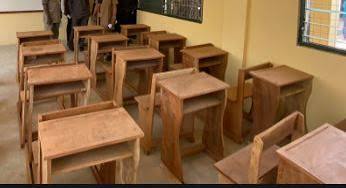
He walked into the room from the photograph.
Thirty-seven desks.
Thirty-seven chairs.
But only thirty-six children remained.
He stood at the back.
Exactly where Kojo had stood.
The investigator joined him.
“Sir.”
Henderson looked at the empty space.
“What?”
“We checked the old attendance records.”
“And?”
“Kojo wasn’t the only one.”
Henderson turned.
“How many?”
The investigator hesitated.
“Seven.”
“Seven children disappeared from the register.”
“And?”
“They all disappeared within the same three-month period.”
Henderson looked around the classroom.
“Seven children.”
“Yes.”
“Seven names.”
“Yes.”
“Seven families.”
“Yes.”
He looked at the empty desk.
“And seven payments may have continued.”
The investigator said nothing.
Henderson slowly walked to the desk.
On it was a small piece of paper.
He picked it up.
Four words had been written in childish handwriting.
*PLEASE COUNT ME TOO* .
Henderson closed his eyes.
“It’s not just Kojo.”
The investigator nodded.
“No, sir.”
Henderson opened his eyes.
“Then we aren’t looking for one missing child.”
He looked down the empty row of desks.
“We are looking for a system that learned how to make children disappear.”
*THE MIDNIGHT DECISION*
At 11:47 p.m., Henderson returned to his office.
He placed everything on the table.
The brown envelope.
The black notebook.
The red file.
The photographs.
The attendance registers.
And the list.
He stared at them for several minutes.
Then he wrote one sentence across a blank sheet of paper:
*FOLLOW THE CHILDREN.*
The investigator looked at him.
“Not the money?”
Henderson shook his head.
“The money already knows where it went.”
“Then what are we following?”
Henderson looked at Kojo’s photograph.
“The children.”
“Why?”
“Because every missing child leaves a hole.”
He pointed at the documents.
“And every hole leaves a number.”
He picked up the black notebook.
“And every number leaves a payment.”
Then he looked at the red file.
“And every payment leaves a signature.”
The investigator understood.
“So we follow the children…”
Henderson nodded.
“To the money.”
“And the money…”
“To the people.”
Henderson closed the file.
“And the people…”
He looked toward the dark window.
“To the man who counted them.”
Outside, Accra slept.
But somewhere in the city, a little boy named Kojo Asare was still alive.
At least, that was what the photograph suggested.
And somewhere else, a man wearing a distinctive watch was beginning to realise that Professor Henderson was no longer investigating missing money.
He was investigating missing children.
And that was far more dangerous.
Because money could be hidden.
Documents could be altered.
Registers could be rewritten.
Figures could be inflated.
But a child—
A child remembered.
And somewhere in Accra, seven children were waiting for someone to remember them.
To be continued…
Thanks for reading.
Havillah Consultants
08082026
*Disclaimer*
———————–:
The Currency of Conscience is a work of fiction. The characters, dialogue, investigative team, documents, events and narrative connections are fictional or fictionalised for literary purposes. The story may draw thematic inspiration from publicly reported issues concerning public-sector accountability, school feeding and the management of public funds. References to real institutions, public figures, reports or allegations, where applicable, should not be interpreted as assertions of criminal conduct. Allegations remain allegations unless established by a competent court. The purpose of this series is to encourage reflection on integrity, accountability and the human cost of corruption.