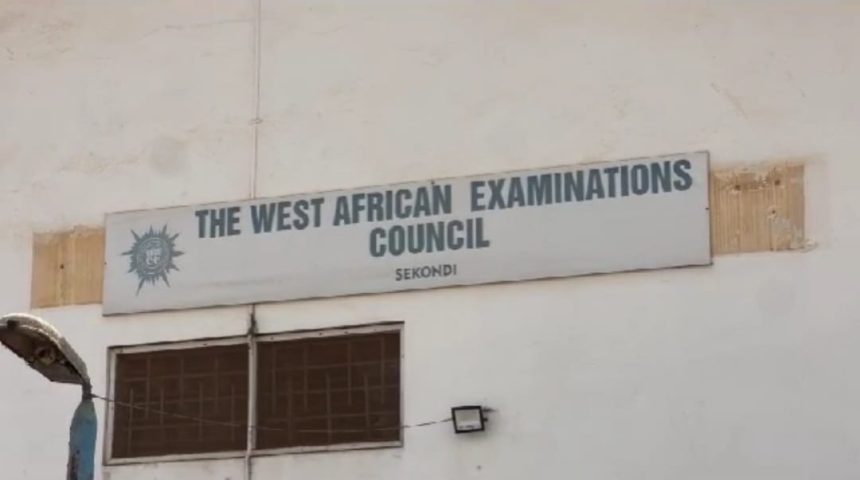
The Ghana National Association of Private Schools (GNACOPS) has called for an end to the West African Examinations Council’s (WAEC) monopoly over public examinations in Ghana, arguing that introducing competition would improve transparency, accountability and the quality of assessment.
The Executive Director of GNACOPS, Obenfo Nana Kwasi Gyetuah, said Ghana should consider allowing other examination bodies to operate alongside WAEC, similar to the system in countries such as Nigeria.
His comments followed a petition submitted by GNACOPS to the Ministry of Education on August 7 over concerns surrounding the provisional results of the 2026 Basic Education Certificate Examination (BECE).
Speaking after the submission of the petition, Mr Gyetuah said WAEC’s 74-year dominance of Ghana’s examination system had gone on for too long and should now be reviewed.
He argued that monopolies could create inefficiencies and weaken accountability because a single institution would face limited competition.
He compared the situation to Ghana’s media industry, arguing that competition among media organisations had contributed to greater public debate and accountability.
He questioned why the examination system should remain largely unchanged after seven decades when other areas of education and public administration were undergoing reforms.
Mr Gyetuah also called for changes to WAEC’s grading system, particularly its use of the Stanine model.
He argued that the system should be replaced with a criterion-referenced grading method under which students’ scores would directly determine their grades.
He said such a system would make examination results easier for students, parents, schools and the public to understand.
Under his proposed approach, candidates who achieve a particular score range would automatically receive a clearly defined grade, making the process more transparent.
The GNACOPS Executive Director further linked the call for competition to concerns over examination leakages and public confidence in examination results.
He questioned why Ghana should continue depending on a single examination body at the basic education level despite recurring concerns about examination security.
“We are calling for the monopoly to be broken,” he said, arguing that the reform would help strengthen Ghana’s education system.