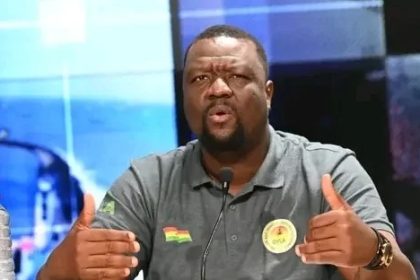
A member of the New Patriotic Party’s (NPP) communications team, Yaw Opoku Mensah, has criticised parts of the media and civil society groups over how they handle the issue of illegal mining, widely known as galamsey.
He argued that some groups have turned the fight against illegal mining into a political matter.
According to him, it is surprising that certain media outlets once blamed the problem mainly on the government of Nana Akufo-Addo but now speak less about it.
He shared these views during a radio discussion on Saturday, April 25. During the programme, he questioned whether political interests now influence how the issue gets reported.
“It was quite astonishing to see people within the media space, playing a certain game and giving a certain narration that illegal mining was solely attributed to Nana Akufo-Addo’s regime,” he told the host.
He pointed out that media attention on polluted rivers and environmental damage seems to have reduced. In his view, this shift raises concerns about fairness and consistency.
“We don’t see the polluted waters on your tables indicating to the world about the devastation,” he said.
He also questioned whether journalists and civil society groups might be working in ways that shape public opinion for political reasons.
“Were the media playing politics as well?” he asked, adding that some individuals could have acted as “political tools” in the past.
He stressed that both the media and civil society organisations have strong influence on public discussions. For that reason, he urged them to remain neutral and consistent when addressing national issues.
He further expressed concern about what he described as silence from groups that were previously very active. He believes this weakens efforts to keep pressure on leaders to act.
“If we are serious, the voice of the media and the CSOs carry weight,” he said, noting that citizens depend on honest and steady advocacy.
Illegal mining continues to pose serious problems in Ghana. The issue affects water bodies, forests, and law enforcement efforts, and it remains a key topic in national conversations under different governments.