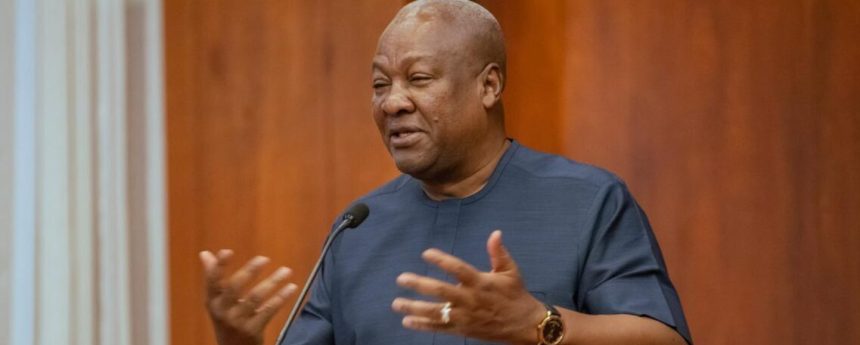
In May 2024, then-opposition leader John Dramani Mahama issued one of his most forceful critiques of Ghana’s handling of flooding in Accra and other parts of the country.
Following heavy rains that left destruction and loss of life in their wake, Mahama framed the situation not as an isolated national setback, but as evidence of deeper systemic failure in governance.
He said, “This has exposed the government’s failure to manage and prevent floods effectively and evokes deep concern about its lack of a comprehensive flood prevention and management plan”.
He further questioned the effectiveness of major state investments in drainage and flood control, pointing in particular to flagship interventions such as the Greater Accra Resilient Integrated Development (GARID) programme.
At the time, he argued that despite significant public spending, the expected impact had not been realised, insisting that Ghana’s recurring flood crisis reflected weak planning and inadequate leadership.
Mahama was even more direct in his conclusion. “The current administration has failed in this regard,” he said.
He went on to contrast the situation with what he described as the alternative under an NDC-led approach, promising a more structured, long-term engineering response to Ghana’s persistent flooding challenge.
Fast forward to today, and the story has hardly changed.
Across Accra and other flood-prone communities, heavy rains continue to trigger widespread inundation. Homes are submerged, livelihoods are disrupted, and emergency services are once again stretched in response to recurring disasters.
The political irony is hard to ignore.
Statements once used to sharply criticise an administration in power are now being revisited in a broader national context where the challenge persists beyond political transitions.
The same flooding problem described as evidence of “government failure” remains a defining infrastructure issue, regardless of which party holds office.
This raises a deeper question in Ghana’s political discourse: is flooding truly a partisan failure, or a long-term structural and planning challenge that has outlived successive governments?
What remains clear is that Ghana’s drainage and urban planning deficits did not emerge under one administration, and they will not be resolved by rhetoric alone.
Only sustained investment, strict enforcement of planning laws, and long-term engineering solutions can meaningfully shift the trajectory.
Yet political accountability also depends on consistency. When leaders define national problems in absolute terms while in opposition, the public naturally expects measurable and visible progress when they eventually assume responsibility.
As flooding once again dominates national attention, Mahama’s 2024 remarks have returned to public debate, not merely as opposition commentary, but as a reminder of the weight of political words when they meet the reality of governance.
In the end, Ghana’s floodwaters continue to rise and recede with the rains. But so too does the political memory of what is said in opposition, and what is demanded in power.