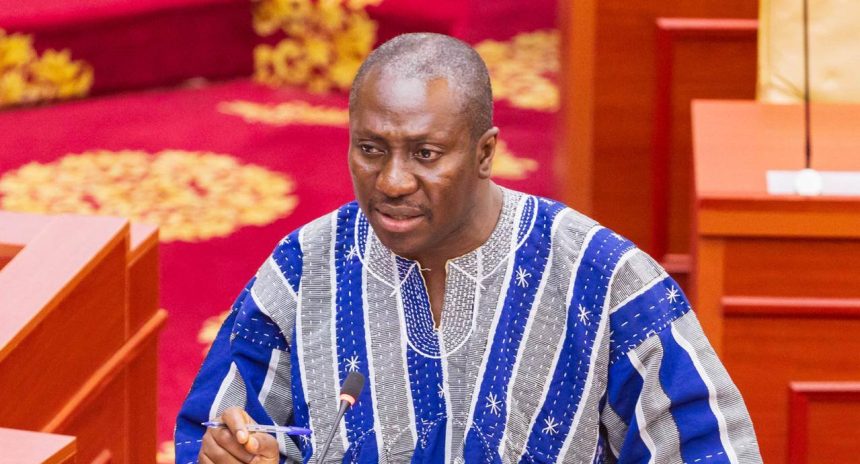
Minority Leader Alexander Afenyo-Markin has called on the government to introduce regulations that will compel suppliers under the National Food Buffer Stock Company to purchase food from Ghanaian farmers for the Free SHS and School Feeding programmes.
According to him, government-funded feeding initiatives should provide a dependable market for local farmers instead of creating opportunities for suppliers to rely on cheaper imported food products.
Afenyo-Markin raised the concern while speaking in an interview on Monday, August 31, 2026.
He said local maize and rice farmers were struggling because imported alternatives were often cheaper, making it difficult for them to compete in the market.
“For the maize farmer, it is in Ghana today, it is cheaper to buy imported maize than locally produced maize. Rice farmers are suffering. It is cheaper to buy imported rice than locally produced rice,” he said.
The Minority Leader questioned the measures being taken by the Ministry of Food and Agriculture to protect local farmers, particularly when the government is spending public funds to provide food for students.
He argued that suppliers who receive contracts to provide food under the Free SHS and School Feeding programmes would naturally seek cheaper sources if there were no rules requiring them to buy locally.
Afenyo-Markin therefore urged the government to establish clear procurement guidelines that would make it compulsory for contracted suppliers to source a significant portion of their food requirements from local farmers.
He said such a policy would help create a stable market for Ghanaian farmers while also supporting the growth of the local agricultural sector.
“The Buffer Stock Company, they are awarding contracts to suppliers to supply schools under the School Feeding and then the Free SHS programme,” he said.
“But I was expecting this government, as part of helping our local farmers, to put in place a regulation that would mandate and make it compulsory for all those suppliers to buy from our local farms.”
He further warned that without proper safeguards, suppliers would continue to choose imported food because of its lower cost.