Ghana’s construction and retail sectors are experiencing a slowdown in activity, while rising prices of key building materials continue to increase pressure on households and developers.
Data from the Bank of Ghana’s September 2026 Monetary Policy Report show that cumulative cement sales declined by 10.3% to 1.48 million tonnes between January and July 2026, down from 1.64 million tonnes during the same period last year.
In July, cement sales dropped by 4.9% year-on-year to 202,218 tonnes, compared with 212,735 tonnes in July 2025. Sales also fell by 0.6% from the 203,435 tonnes recorded in June, reflecting softer demand across the construction sector.
Retail activity followed a similar trend, with sales declining by 1.5% year-on-year to GH¢236.41 million in July. However, cumulative retail sales for the first seven months of 2026 rose by 2.2%.
Meanwhile, domestic Value Added Tax (VAT) collections increased by 11.5% year-on-year to GH¢2.14 billion in July, while cumulative collections reached GH¢13.62 billion, representing a 13.8% increase.
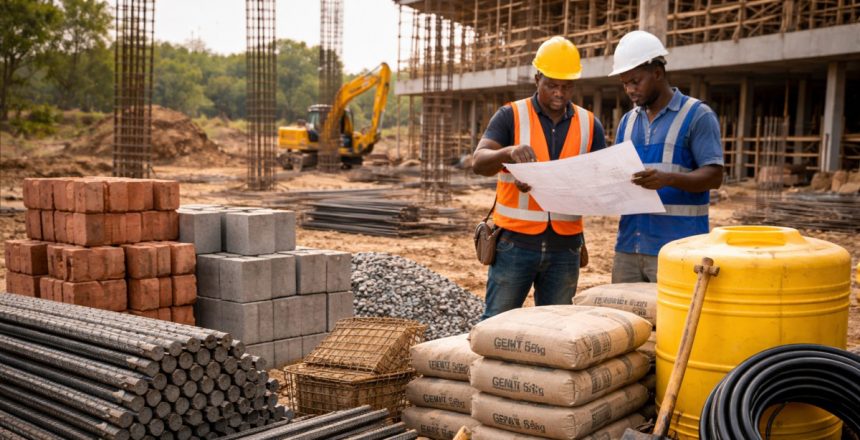
Despite the slowdown in activity, construction costs continued to rise. The Ghana Statistical Service reported that building cost inflation increased to 4.6% in August from 4.0% in July, driven largely by materials and plant and equipment.
Iron rods climbed from GH¢7,300 to GH¢7,500 per tonne, while rough sand rose from GH¢2,700 to GH¢2,800 per double-axle load.
The combination of weaker sales and rising input costs could complicate construction projects, particularly for developers and households operating under tight budgets.