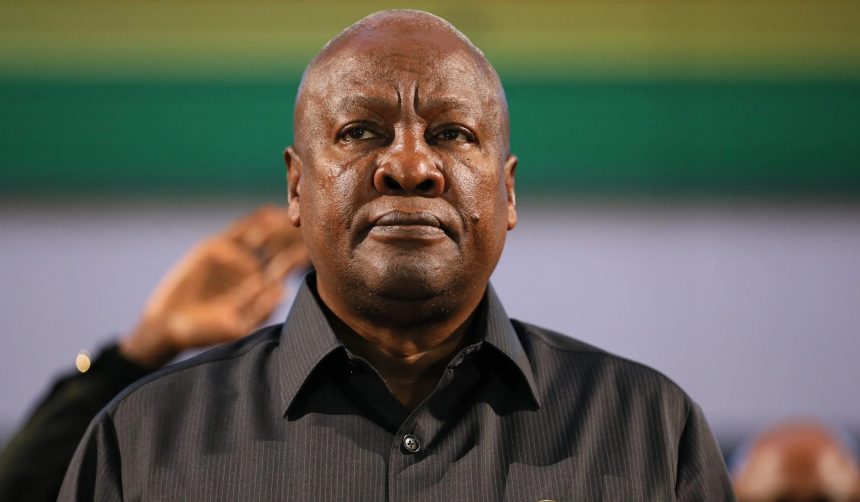
The Office of the President for the Mahama administration is reported to have a total of 808 staff members, made up of 233 political appointees and 575 civil and public servants, according to official staffing structures linked to the Presidency and the Office of Government Machinery (OGM).
The political appointees include senior advisers, executive assistants, directors, and other personnel who support the day-to-day work of the President.
The civil and public servants, on the other hand, are drawn from various state institutions and deployed to support administrative, technical, communication, and security operations at the Presidency.
These include agencies such as the Ghana Broadcasting Corporation, Ghana News Agency, Information Services Department, and other public sector bodies whose staff are placed under the central coordination of the Presidency.
These workers remain on the national payroll through the Controller and Accountant-General’s Department, meaning their salaries are paid by the state even though they are assigned to work at the Presidency or related offices.
The structure of staffing is directly linked to government expenditure. In the 2025 national budget, the Office of Government Machinery, which includes the Presidency and related agencies, was allocated about GH¢2.7 billion.
This forms part of Ghana’s total projected expenditure of about GH¢290.9 billion for the year.
A significant portion of the GH¢2.7 billion allocation is used to cover compensation of employees, which includes salaries, allowances, and related payments for both political appointees and civil servants working under the Presidency.
Government budget breakdowns indicate that personnel-related costs represent the largest share of expenditure within the Presidency’s allocation.
Officials have explained that the amount does not represent spending on the President alone, but rather consolidates the cost of multiple institutions operating under the Office of Government Machinery.
These institutions provide essential support in governance, public communication, auditing, and national coordination.
However, the size of both the staffing and the associated cost has generated public debate.
Critics argue that the combined workforce of over 800 people and the multi-billion-cedi allocation place a heavy burden on the public purse, especially at a time when the government is under pressure to reduce expenditure, manage debt obligations, and is struggling to pay cocoa farmers.
818 staff, GH¢2.7bn Budget: Mahama’s presidency cost under fire.