The operator of the West African Gas Pipeline (WAGP) says record gas deliveries, improving infrastructure reliability and plans to expand capacity are positioning the region for a new phase of energy integration, although challenges around payments, contract enforcement and supply security remain key risks.
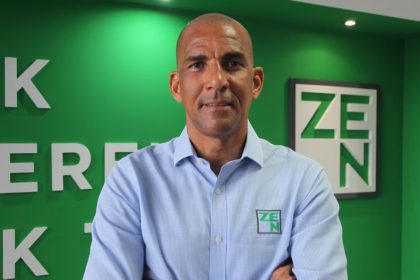
Abiodun Bodunrin, Managing Director of the West African Gas Pipeline Company Limited (WAPCo), said the pipeline recorded its strongest performance in 2025 and has continued to post higher volumes this year, underscoring growing demand for natural gas across West Africa.
Speaking at the West African Gas Summit 2026 in Accra, Mr. Bodunrin said gas volumes transported through the regional pipeline network have grown significantly over the past decade, with the strongest gains occurring in the last three years.
According to him, 2025 marked WAPCo’s best year since commercial operations began in 2011, with gas deliveries increasing by more than 20 percent from both eastern and western supply sources. The company has continued that momentum into 2026, achieving record delivery rates across the system.
“We’ve achieved peak volume delivery in the entire WAGP system,” Mr. Bodunrin said, noting that first-quarter average throughput rose to about 257,000 MMBtu from historical averages of around 219,000 MMBtu. Peak delivery rates have reached approximately 315,000 MMBtu this year.
The performance reflects a notable turnaround for a regional infrastructure project that has historically faced supply disruptions, operational challenges and concerns over reliability.
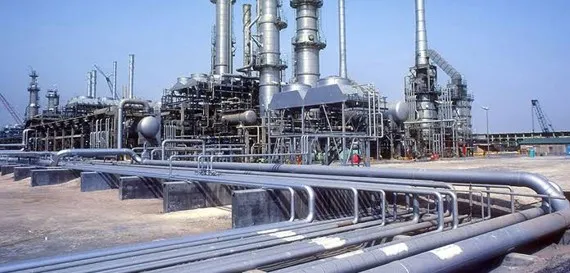
Stretching about 569 kilometres from Nigeria through Benin and Togo to Ghana, the West African Gas Pipeline was conceived as a regional integration project aimed at linking gas-producing areas with major demand centres. Initially designed as a one-way pipeline transporting Nigerian gas westward, the infrastructure now operates as a bidirectional and open-access system following the development of Ghana’s offshore gas resources.
The network currently serves 17 shippers and links multiple supply and demand centres across the four participating countries.
Mr. Bodunrin said the company believes existing infrastructure can accommodate significantly higher gas volumes without major near-term capital expenditure. Pipeline utilisation reached about 60 percent at peak periods in 2025, up from typical levels of between 45 percent and 50 percent, indicating substantial unused capacity remains available.
That spare capacity is central to WAPCo’s growth strategy.
The company aims to increase gas deliveries from Nigeria by an additional 100 million standard cubic feet per day this year, representing roughly a 70 percent increase compared with last year’s levels. Over the next five years, WAPCo is targeting an almost 80 percent increase in system capacity relative to 2025 through upgrades at receiving and metering stations across the network.
The strategy is based on the assumption that gas demand across the region will continue to rise as governments pursue industrialisation, power generation expansion and energy security objectives.
However, Bodunrin cautioned that infrastructure alone will not deliver the next stage of growth.
Despite rising throughput, only about 30 percent of current transported volumes are supported by firm contracts, with the remainder consisting largely of interruptible arrangements. That creates challenges for attracting investment into expansion projects because lenders and investors typically require long-term contractual commitments before financing additional infrastructure.
“Nobody is going to invest money without some confirmation that the capacity you are planning to expand to will be utilised,” he said.
Beyond contract certainty, WAPCo identified payment discipline as one of the most significant constraints facing the regional gas industry. Mr. Bodunrin said payment challenges persist throughout the West African gas value chain and could undermine efforts to attract new investment if left unresolved.
He also highlighted the need for reliable gas supply from Nigeria, which remains the dominant source of gas entering the pipeline system. Investments currently underway on Nigeria’s domestic gas infrastructure are expected to improve supply reliability and support higher export volumes into the regional network.
Operationally, WAPCo says significant improvements have already been achieved. The company reported pipeline availability and reliability improved from about 87 percent several years ago to 99.3 percent in 2025 following investments in maintenance and infrastructure upgrades.
The company sees those improvements as critical to rebuilding confidence among customers that have historically been reluctant to commit to long-term contracts because of concerns over supply interruptions.
WAPCo’s ambitions extend beyond the four countries currently connected by the pipeline. The company is exploring opportunities to extend the network to Côte d’Ivoire and potentially integrate with broader continental gas infrastructure initiatives, including the proposed African Atlantic Gas Pipeline.
Such expansion would represent a significant step toward creating a more integrated regional gas market capable of supporting economic growth and energy security across West Africa.
For that vision to materialise, Mr. Bodunrin said governments, regulators, suppliers and consumers must strengthen contract enforcement, maintain regulatory alignment across jurisdictions and improve payment performance.
“The demand is there,” he said. “The gas supply is there. What we need is collaboration across the value chain to ensure that we can unlock the next phase of growth.”