The Vehicles and Assets Dealers Union of Ghana (VADUG) has raised concerns about the growing presence of Chinese automobile brands in the Ghanaian market.
The union believes the trend is putting local vehicle dealers under intense pressure and threatening thousands of jobs across the industry.
At a press conference held in Accra on Thursday, June 11, 2026, VADUG President Bernard Ntrakwa said Chinese vehicle manufacturers and assemblers are expanding their operations in Ghana by importing, assembling, and selling vehicles directly to consumers.
According to him, this development has created an unfair business environment for local dealers.
VADUG explained that many Ghanaian dealers import used vehicles from countries such as the United States, Japan, and several European nations. These dealers pay between 35 and 50 percent in taxes and duties on every vehicle they bring into the country.
In contrast, Chinese assemblers who import semi-knocked-down (SKD) and completely knocked-down (CKD) vehicle kits enjoy tax exemptions under Ghana’s automotive policy.
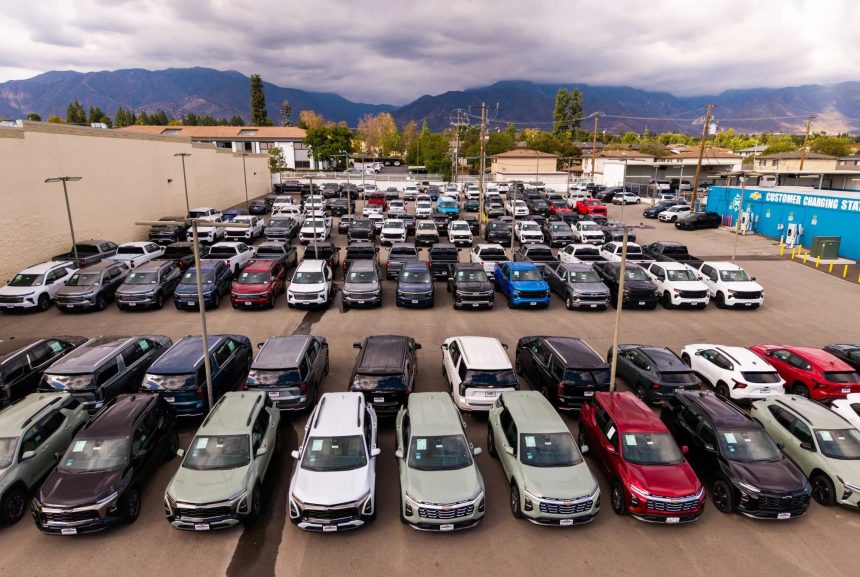
The union argues that this difference in tax treatment gives Chinese brands a major advantage. As a result, local dealers are losing market share, and many vehicles remain unsold for longer periods.
“We do not oppose foreign investment. But this current trend is unsustainable,” the union said.
VADUG also expressed concern about the increasing involvement of Chinese automobile companies in both vehicle distribution and retail sales.
The union noted that leading manufacturers from countries such as the United States, Japan, Germany, and South Korea have traditionally worked through local dealerships instead of selling directly to customers.
“Without strict regulation from GSA, DVLA, and GIPC, Ghana risks becoming a dumping ground for substandard cars. That is a safety and environmental time bomb,” the union stated.
To address these concerns, VADUG is urging the government to review the current tax and duty system.
The association is also calling for stronger standards on vehicle quality, safety, and warranty protection. In addition, it wants institutions such as the Ghana EXIM Bank to provide financial support and capacity-building programmes for local automobile dealers.
Beyond the issue of Chinese vehicle imports, VADUG criticised the government’s AI Publican System, which customs officials use to value imported vehicles at the ports. The union claims the system often assigns excessively high values to vehicles, leading to increased import costs.
According to VADUG, many dealers end up paying duties that are much higher than expected. The union believes this situation makes it harder for local businesses to compete in an increasingly crowded market.
As part of its recommendations, VADUG has called on the Ghana Revenue Authority and the government to engage industry players in discussions about possible reforms.
The union is advocating a flat-rate duty regime for vehicles and spare parts, arguing that such a system would improve transparency, reduce uncertainty, and make the sector more predictable for businesses.